Preventive Maintenance for Commercial Washers and Dryers
SudsList Editorial · Aug 4, 2026
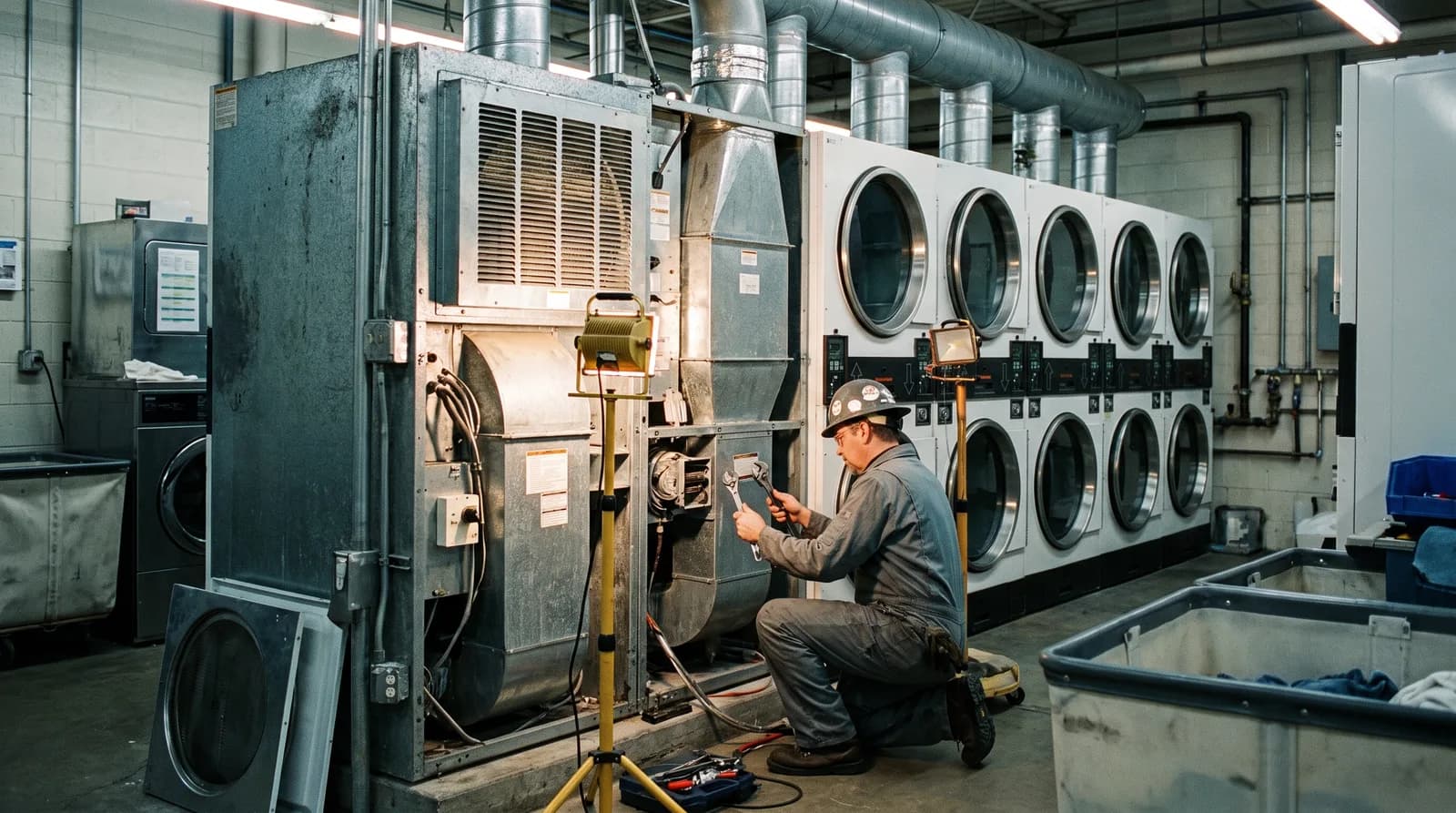
Preventive maintenance for commercial washers and dryers is the scheduled service of lint, drains, belts, bearings, gas, and venting that keeps machines running, extends their life, and prevents fires. Instead of waiting for a breakdown, you inspect and service wear points on set intervals, so failures are caught while they are cheap and safe to fix. Done well, a preventive maintenance program is the difference between equipment that lasts its full service life and equipment that fails early and unpredictably. It is also your first line of defense against dryer fires, which are the most serious risk in a self-service laundry.
Key takeaways
- Preventive maintenance (PM) is scheduled inspection and service of wear points, done before a part fails rather than after.
- The highest-stakes PM is dryer lint and venting, because buildup is the leading cause of commercial dryer fires.
- Washer PM centers on drains, hoses, seals, and bearings, where a slow leak or worn bearing turns into a major repair if ignored.
- Clear intervals and a written log are what make PM actually happen, especially in an absentee store.
- Most inspection is DIY, but gas, high-voltage, and sealed-bearing work belongs to a qualified technician.
Contents
- What is preventive maintenance for laundry equipment?
- Why does preventive maintenance matter?
- How do you maintain dryer lint and venting?
- What washer maintenance prevents the big failures?
- How do you handle belts and bearings?
- What gas and electrical maintenance is needed?
- How often should each task be done?
- Which tasks are DIY and which need a technician?
- How much does preventive maintenance cost versus a breakdown?
- How do you build and track a PM schedule?
What is preventive maintenance for laundry equipment?
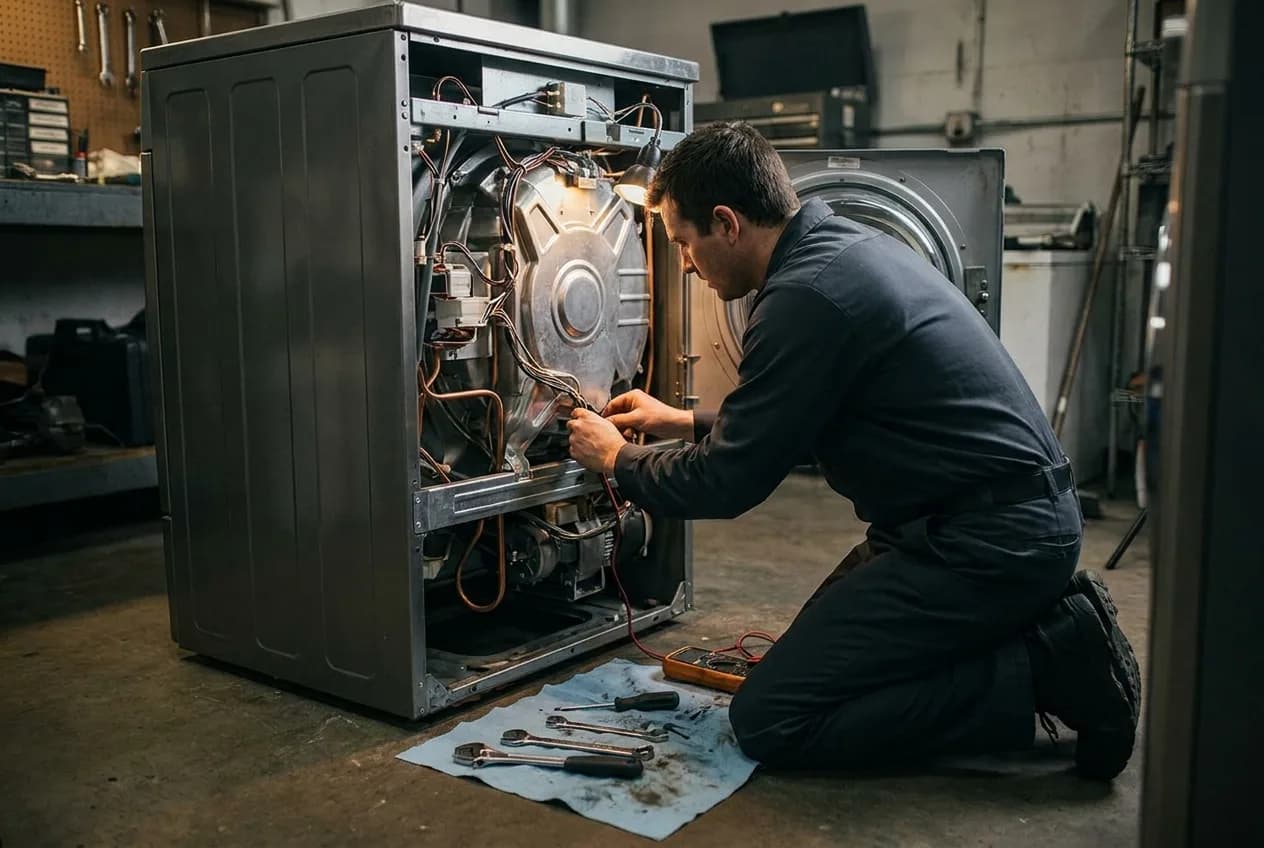
Preventive maintenance (PM) is the practice of inspecting and servicing equipment on a schedule so parts are cleaned, adjusted, or replaced before they fail. In a laundromat it applies to washers, dryers, water heaters, and the venting and utility connections around them.
PM is broader than a daily cleaning walk. It includes the mechanical checks, lint clearing, and drain care that keep machines dependable. Where a maintenance checklist tells you what to look at, a PM program adds the intervals, the tools, and the decision of when to call a technician. For the checklist view of these tasks, start with the laundromat maintenance checklist.
Why does preventive maintenance matter?
Preventive maintenance matters because it protects three things at once: uptime, machine life, and safety. A machine kept in service earns; a machine down for a failed part earns nothing while it waits for a tech.
The safety piece is not abstract. Lint is combustible, and dryers run hot, so neglected venting is the single most common path to a commercial dryer fire. PM also protects the investment itself: equipment that is serviced on schedule tends to reach the upper end of its expected life, which is why it connects directly to how long commercial washers and dryers last. Well-maintained machines also run more efficiently, and the Energy Star program notes that clean, properly serviced equipment uses less energy per load.
How do you maintain dryer lint and venting?
Dryer PM is mostly lint management, because lint restricts airflow, raises temperatures, lengthens drying, and feeds fires. This is the most important preventive work in the building, so it gets the tightest intervals.
Daily and weekly lint tasks
- Clear every lint screen on each shift and remove lint from the floor behind dryers.
- Weekly, clean lint from the housing, the area around the vent connection, and the transition duct.
Periodic vent cleaning
- On a monthly to quarterly basis, clean the full vent run from the machine to the exterior, since buildup collects along the whole path, not just at the screen.
- Confirm exterior vent flaps open freely and are not blocked by debris or nesting.
- Watch for warning signs between cleanings: longer drying times, hot dryer cabinets, or a burning smell all point to restricted airflow.
Because venting is a fire-safety system, treat a full vent cleaning as non-negotiable and hire it out if you are not equipped to reach the entire run.
What washer maintenance prevents the big failures?
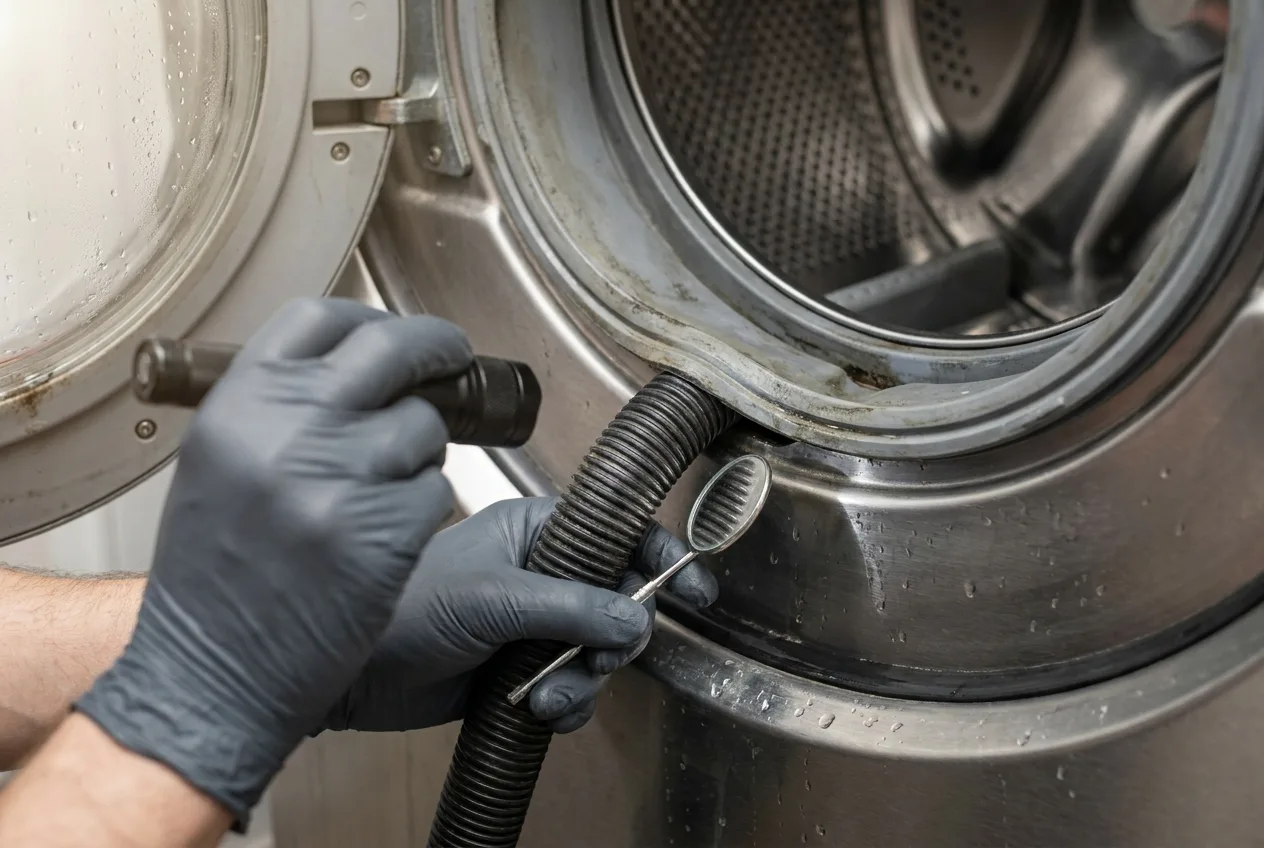
Washer PM centers on water: drains, fill and drain hoses, door seals, and the components a leak can damage. A slow leak is the quiet failure that rots floors and shorts electronics if it is not caught early.
- Inspect fill and drain hoses monthly for cracks, bulges, or seepage, and replace on age rather than waiting for a burst.
- Check door seals and gaskets for tears and mold, since a failed seal leaks and fails cycles.
- Keep drains and drain troughs clear so a backed-up drain does not flood the floor.
- Clean detergent injectors and dispensers so they do not clog and starve cycles.
How do you handle belts and bearings?
Belts and bearings are the wear parts that decide a machine's second half of life, and PM catches them by sound and feel before they seize. A worn bearing that is ignored can damage the shaft and drum, turning a modest part into a major rebuild.
- Inspect drive belts monthly for glazing, cracks, and fraying, and check tension.
- Listen for bearing noise or a rumble on spin, and feel for drum play, which signals a bearing starting to go.
- Address a noisy bearing promptly, since the cost climbs sharply once it damages surrounding parts.
Belt replacement is often within reach for a handy operator, but sealed-bearing work usually is not, both because of the teardown involved and the risk of doing it wrong. Know your limit and hand off the rest.
What gas and electrical maintenance is needed?
Gas and electrical PM is inspection-only for most operators, with the actual service left to licensed professionals. These systems carry the highest risk, so the rule is look and report, do not repair.
- Visually inspect gas connections and flexible connectors for damage or corrosion, and act immediately on any gas smell.
- Keep burner and ignition areas free of lint, which is both an efficiency and a fire issue.
- Watch for tripping breakers, scorching, or hot outlets, which point to electrical problems.
- Schedule periodic professional inspection of gas trains, igniters, and electrical connections.
Water heating sits alongside this work, since a poorly maintained heater drives up gas cost and starves machines of hot water; see commercial laundry water heaters for that side.
How often should each task be done?
Intervals depend on volume, but the structure below is a reliable starting point that you tighten as your machine hours rise. A busy store simply moves everything up a notch.
| Task | Typical interval |
|---|---|
| Clear lint screens, leak and out-of-order check | Daily / each shift |
| Clean lint housings, inspect hoses, test cycles | Weekly |
| Inspect belts, bearings, drains, gas connections | Monthly |
| Full vent cleaning, water-heater service | Quarterly (or sooner) |
| Professional gas, electrical, and bearing inspection | Annual, plus as needed |
Treat these as minimums. Longer dryer hours, hard water, or an older fleet all justify shorter intervals.
Which tasks are DIY and which need a technician?
Most inspection and cleaning is DIY; diagnosis and repair of gas, high-voltage, and sealed components is technician work. Getting this boundary right protects both safety and your equipment warranties.
| Task | DIY or technician |
|---|---|
| Lint, hoses, drains, dispensers, belts (inspection) | DIY / attendant |
| Belt replacement, minor part swaps | DIY if experienced |
| Bearing replacement, motor repair | Technician |
| Gas, ignition, and electrical service | Licensed technician |
When a job crosses into gas, high voltage, or a sealed drivetrain, hand it off. For structuring that relationship, including spare parts and response times, see how to handle laundromat repairs.
How much does preventive maintenance cost versus a breakdown?
Preventive maintenance is a small, predictable cost that displaces a large, unpredictable one. The math almost always favors PM once you count the lost turns, not just the repair.
Take a worked example: a bank of dryers whose vents are cleaned on a quarterly schedule keeps drying times short and avoids the overheating that shortens component life. Skip that maintenance and you risk a heat-related failure, a rushed emergency service call, several machines out of service on a weekend, and, in the worst case, a fire. The preventive work is minor and scheduled; the failure is major and comes at the worst time. To weigh service against replacing an aging unit, use the equipment replacement cost calculator, and if a re-equip is on the horizon, equipment financing for laundromats covers how operators fund it.
How do you build and track a PM schedule?
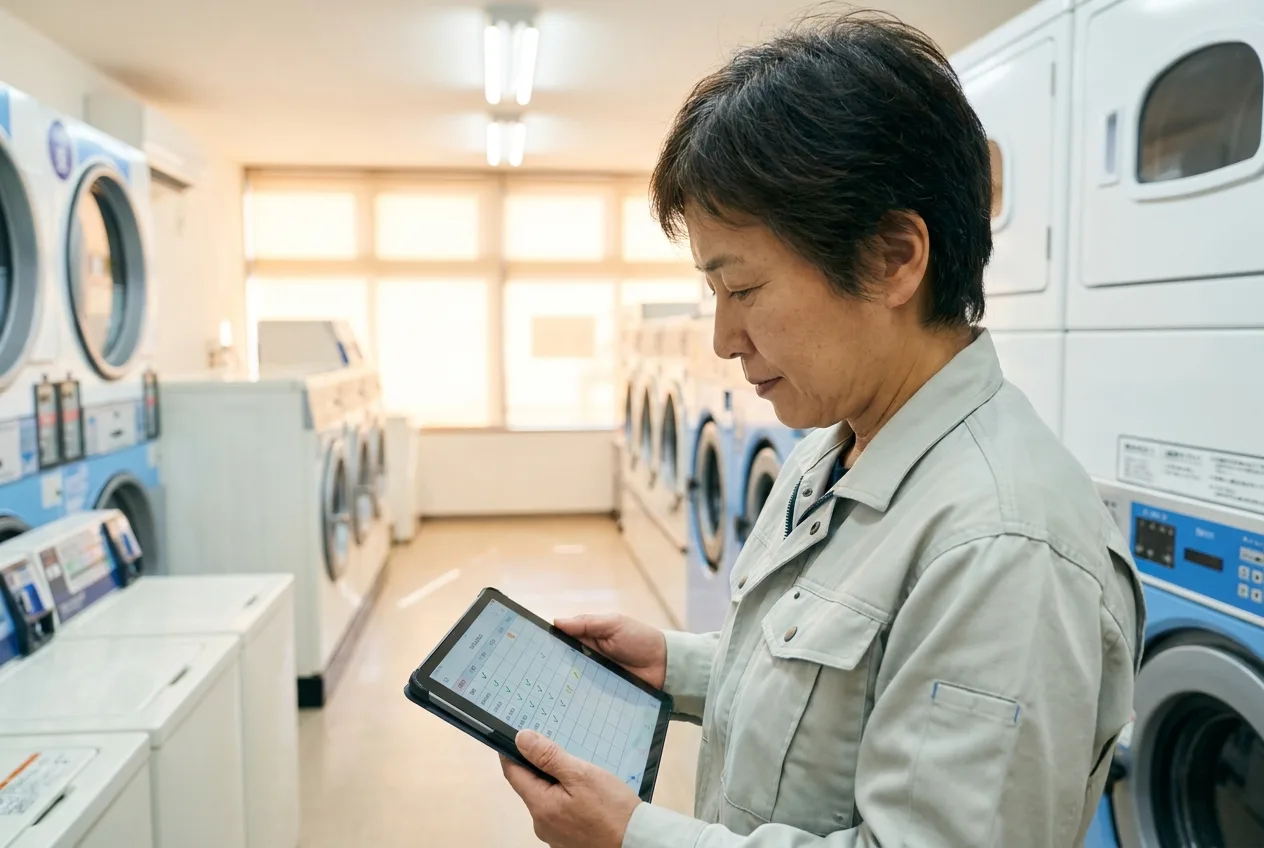
Build a PM schedule by listing every task, assigning an interval, naming who does it, and logging each completion. A schedule that lives only in your head is not a program; it is a hope.
- Write daily and weekly tasks into your opening and attendant routines.
- Put monthly and quarterly tasks on a calendar with reminders.
- Log each completed task with a date and initials, and keep records where a bookkeeper or buyer can review them.
- In an absentee store, confirm the work with cameras or remote monitoring rather than assuming.
Industry groups such as the Coin Laundry Association publish operating resources and maintenance templates you can adapt rather than building a schedule from scratch. Comparing dryer models before you buy also affects how much PM you will carry, since designs differ in venting and serviceability; the best commercial dryer brands for laundromats covers that trade-off. A documented PM history is also an asset at sale, because it proves the fleet was cared for.
Frequently asked questions
How often should you do preventive maintenance on commercial dryers?
Clear lint screens every shift, clean lint housings weekly, and do a full vent cleaning on a monthly to quarterly rhythm depending on volume. Busy stores with long dryer hours should clean vents more often. Because lint buildup is the leading cause of commercial dryer fires, this is the one interval you should never stretch to save time.
What is the most important preventive maintenance task in a laundromat?
Dryer lint and vent maintenance, without close competition. Lint restricts airflow, raises temperatures, lengthens drying, drives up gas use, and feeds fires. Keeping screens, housings, and the full vent run clean protects safety, performance, and your utility bill at the same time.
Can I do laundromat preventive maintenance myself?
You can do most inspection and cleaning yourself, including lint, hoses, drains, dispensers, and belt inspection. Leave gas, high-voltage, and sealed-bearing work to a licensed technician because of the safety and warranty risk. A good rule is that you look, clean, and report, and a tech diagnoses and repairs.
Does preventive maintenance really extend machine life?
Yes. Equipment serviced on schedule tends to reach the upper end of its expected life, while neglected machines fail early from clogged vents, worn bearings, and leaks that damage other parts. PM does not make a machine last forever, but it reliably captures the life you already paid for and keeps efficiency up.
How do I keep preventive maintenance from being forgotten?
Assign every task an interval and an owner, then log each completion with a date and initials. Write daily and weekly items into attendant routines and put monthly and quarterly items on a calendar with reminders. In an absentee store, confirm the work with cameras or remote monitoring instead of assuming it happened.
Is preventive maintenance worth the cost?
Almost always, once you count lost turns and not just the repair bill. Preventive work is small and scheduled, while a breakdown is large, unpredictable, and tends to strike at your busiest times with machines out of service. The rare exception is a machine already near the end of its life, where replacement may beat continued service.