Sales Tax on Wash-and-Fold Laundry
SudsList Editorial · Sep 2, 2026

Whether you must charge sales tax on wash-and-fold laundry depends entirely on your state, because laundry and dry-cleaning services are taxable in some states and exempt in others, and self-service coin laundry is often treated differently from attended wash-and-fold. There is no single national answer, so the only reliable way to know is to check your own state's rules with its department of revenue. This guide explains why the answer varies, how to find yours, and what to set up if your state taxes the service. It does not state any state's rule as fact, because those rules change and differ from state to state.
Key takeaways
- There is no national answer: some states tax laundry and wash-and-fold services, others exempt them, and rules change.
- Self-service coin laundry and attended wash-and-fold are often treated differently, so do not assume one rule covers both.
- The only reliable source is your state department of revenue; general guides and other owners are starting points, not authority.
- If your service is taxable, you register for a sales tax permit, collect the tax, and remit it on your state's schedule.
- Guessing wrong is costly in both directions: failing to collect owed tax creates a liability, and charging tax you should not creates its own problems.
Contents
- Is wash-and-fold laundry taxable?
- Why does sales tax on laundry vary by state?
- How do you find your state's rule?
- How do you register and collect sales tax?
- Is self-service coin laundry taxed like wash-and-fold?
- What happens if you get sales tax wrong?
- How does sales tax affect wash-and-fold pricing?
Is wash-and-fold laundry taxable?
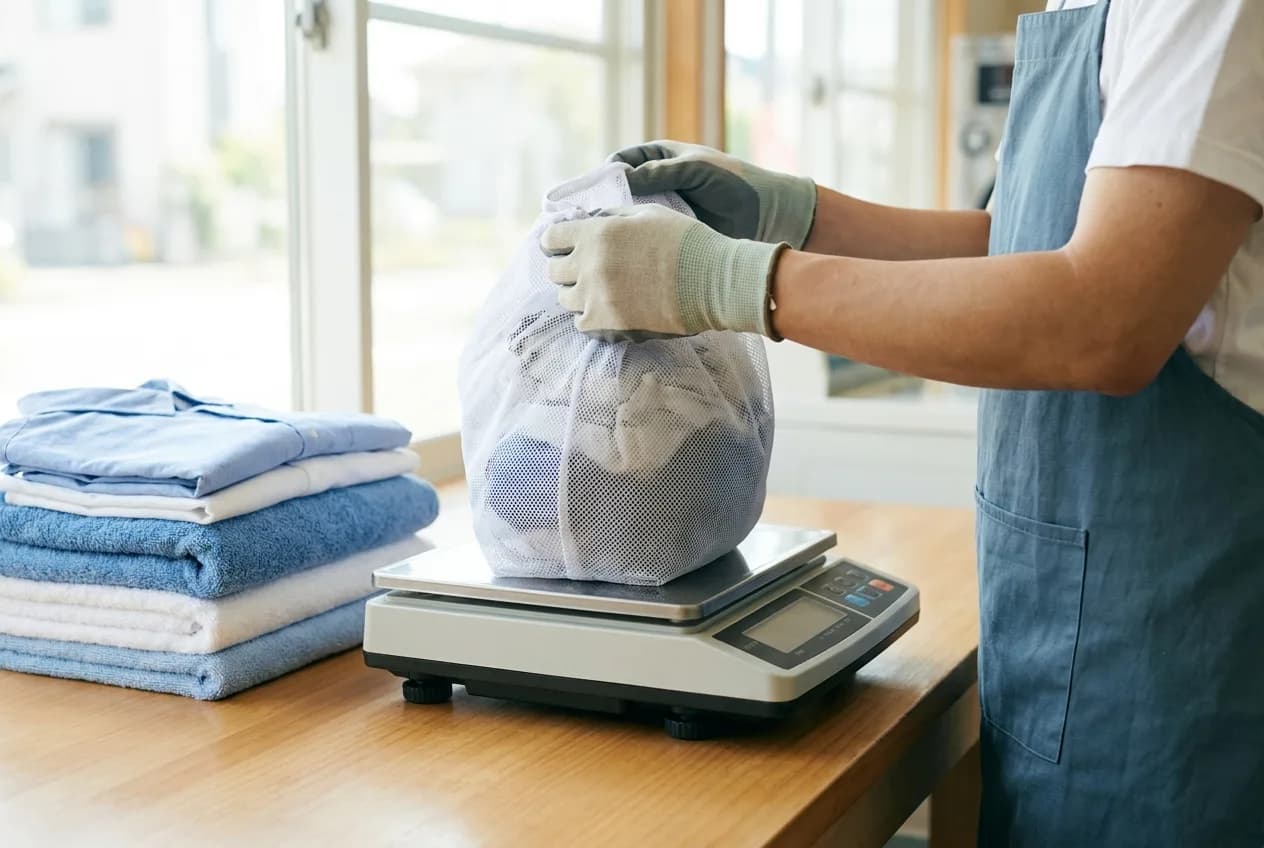
Wash-and-fold laundry may or may not be subject to sales tax, and the answer is set entirely by the state where you operate. Some states tax personal services including laundry and dry cleaning, some exempt them, and some tax certain parts of the service but not others. Because of that spread, no guide can tell you your rate; it can only tell you to check.
The safe assumption for a new operator is that the service might be taxable, so you confirm before you set prices, rather than discovering a liability later. Starting from that posture costs a phone call or a website visit and avoids an unpleasant surprise.
If you are still building out the service, the tax question fits alongside pricing and workflow decisions covered in how to add wash-and-fold to your laundromat.
Why does sales tax on laundry vary by state?
Sales tax on laundry varies because sales tax is administered by states, not the federal government, and each state writes its own list of what is taxable. Most states tax goods by default, but services are treated inconsistently: one state taxes laundry as a personal service, a neighbor exempts it, and a third taxes dry cleaning but not self-service washing.
A few patterns show up across states, though none are universal:
- Self-service coin or card laundry is frequently treated as exempt or handled differently from attended service.
- Attended wash-and-fold, being a service you perform, is more often where taxability comes into question.
- Dry cleaning is sometimes treated separately again.
| Service type | How states often treat it | What to confirm |
|---|---|---|
| Self-service coin or card | Frequently exempt or handled separately | Whether vend revenue is taxed at all |
| Attended wash-and-fold | More often where taxability arises | Whether the per-pound service is taxable |
| Drop-off dry cleaning | Sometimes treated as its own category | Its specific rule, separate from washing |
The table shows tendencies, not rules, and any of these can flip from one state to the next. Because these categories are drawn differently in each state, the only thing you can generalize is that you cannot generalize. The Coin Laundry Association publishes operator resources that can point you toward the right questions for your state.
How do you find your state's rule?
Find your state's rule by going to your state department of revenue, the agency that administers sales tax, and checking how it classifies laundry and wash-and-fold services. Their website usually lists taxable and exempt services, and their staff can answer a direct question about your specific service.
A reliable way to get a clear answer:
- Search your state department of revenue site for laundry, dry cleaning, and personal services.
- Look for a taxable-services list or a rule that names laundry specifically.
- If it is unclear, call the department or ask a local accountant who knows your state.
- Keep a written record of the answer you relied on.
Do not rely on what another owner in a different state does, or on a general article, for a final answer. The federal IRS handles income tax, not state sales tax, so sales tax questions go to the state, not the IRS. A local accountant is often the fastest route to a confident answer.
How do you register and collect sales tax?
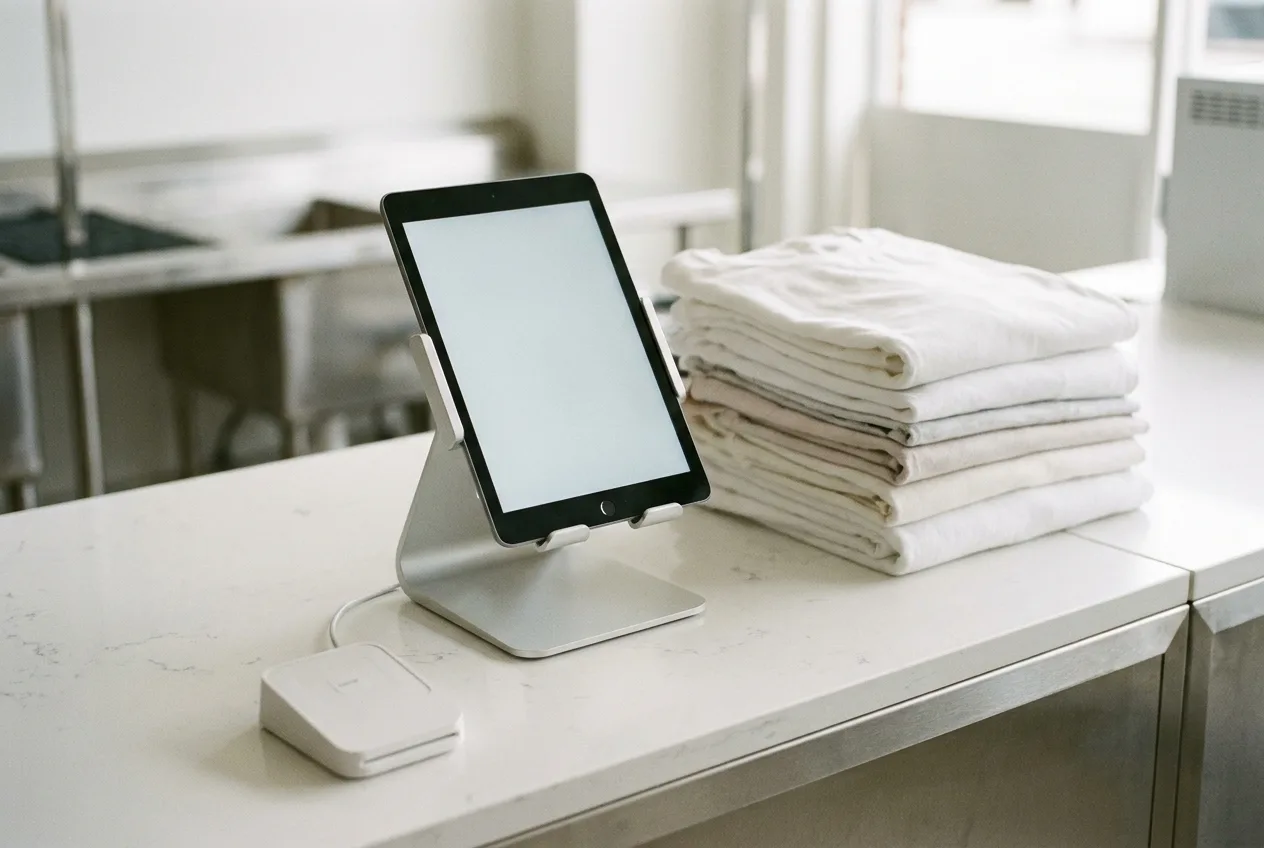
If your state taxes the service, you register for a sales tax permit with the state, add the correct tax to each taxable wash-and-fold ticket, and remit what you collect on the state's filing schedule. You collect the tax on the state's behalf, so the money is not yours to keep; it is held and passed through.
The basic compliance loop is:
- Register for a sales tax permit or seller's account with your state.
- Configure your point-of-sale or ticket system to add the correct rate.
- Collect the tax on each taxable transaction.
- File and remit on your state's monthly, quarterly, or annual schedule.
Your point-of-sale or management software can usually apply the right rate automatically once configured, which keeps tickets accurate. Keep the sales tax you collect separate in your books so it is ready to remit; see laundromat bookkeeping basics.
Is self-service coin laundry taxed like wash-and-fold?
Often not: many states treat self-service coin or card laundry differently from attended wash-and-fold, so a store can have one part of its revenue taxable and another exempt. Self-service is sometimes viewed as the customer renting a machine, while wash-and-fold is a service you perform, and states draw that line in different places.
The practical consequence is that you may need to handle two revenue streams differently, taxing wash-and-fold tickets while leaving coin vend untaxed, or vice versa, depending on your state. That is another reason to get a clear, service-specific answer rather than a blanket one.
If you run both sides, keep the revenue streams cleanly separated in your records so each is reported correctly. The mechanics of running the attended side are covered in the wash-and-fold business guide.
What happens if you get sales tax wrong?
Getting sales tax wrong is costly in both directions: if you should have collected tax and did not, the state can assess the uncollected tax plus penalties and interest, and that liability follows the business. If you charge tax you should not, you can create refund obligations and customer disputes.
Because an uncollected-tax liability can attach to the business, it also surfaces when you sell. A buyer's due diligence may look for sales tax compliance, and an unresolved liability can reduce the price or stall the deal, much like unpaid payroll taxes would.
That is why the small effort of confirming your rule up front protects both current operations and eventual resale. Buyers scrutinize exactly these obligations; see how stores are examined at exit in hidden costs of buying a laundromat, and note that your own income-tax picture is separate again in laundromat tax deductions for owners.
How does sales tax affect wash-and-fold pricing?
If your state taxes wash-and-fold, decide up front whether your posted per-pound price includes the tax or adds it at the ticket, because that choice affects how customers perceive your price against competitors. Adding tax on top keeps your advertised rate lower; building it in keeps the ticket simple but raises the number on your sign.
Whatever you choose, be consistent and clear, since a surprise tax line at pickup frustrates customers. The tax itself is not your margin, so do not confuse collected tax with revenue when you set the price that has to cover your labor and utilities.
Set the underlying price on the economics first, then layer the tax decision on top; the pricing method is covered in how to price wash-and-fold laundry. When you are ready to see how service-based laundry businesses are presented, browse wash, dry, and fold businesses for sale.
Frequently asked questions
Do I have to charge sales tax on wash-and-fold laundry?
It depends entirely on your state, since laundry and dry-cleaning services are taxable in some states and exempt in others. There is no national answer, so check with your state department of revenue, which administers sales tax. A local accountant who knows your state is often the fastest way to a confident answer.
Is coin laundry taxed the same as wash-and-fold?
Often not. Many states treat self-service coin or card laundry differently from attended wash-and-fold, so one part of your revenue may be taxable while the other is exempt. Get a service-specific answer for each stream rather than assuming one rule covers both, and keep the two revenue streams separated in your books.
Where do I find out if laundry is taxable in my state?
Go to your state department of revenue, the agency that administers sales tax, and look for its list of taxable and exempt services or a rule naming laundry. If it is unclear, call the department or ask a local accountant. The IRS handles federal income tax, not state sales tax, so sales tax questions go to the state.
What happens if I do not collect sales tax I owed?
The state can assess the uncollected tax plus penalties and interest, and that liability attaches to the business. It can also surface when you sell, since a buyer's due diligence may look for sales tax compliance and an unresolved liability can reduce the price or stall the deal. Confirming your rule up front avoids the surprise.
Should my posted wash-and-fold price include sales tax?
That is your choice if your state taxes the service, but be consistent and clear about it. Adding tax at the ticket keeps your advertised per-pound rate lower, while building it in keeps the ticket simple but raises your posted number. Remember the collected tax is not your margin, so set the underlying price to cover labor and utilities first.