When to Remodel or Refresh a Laundromat
SudsList Editorial · Sep 4, 2026
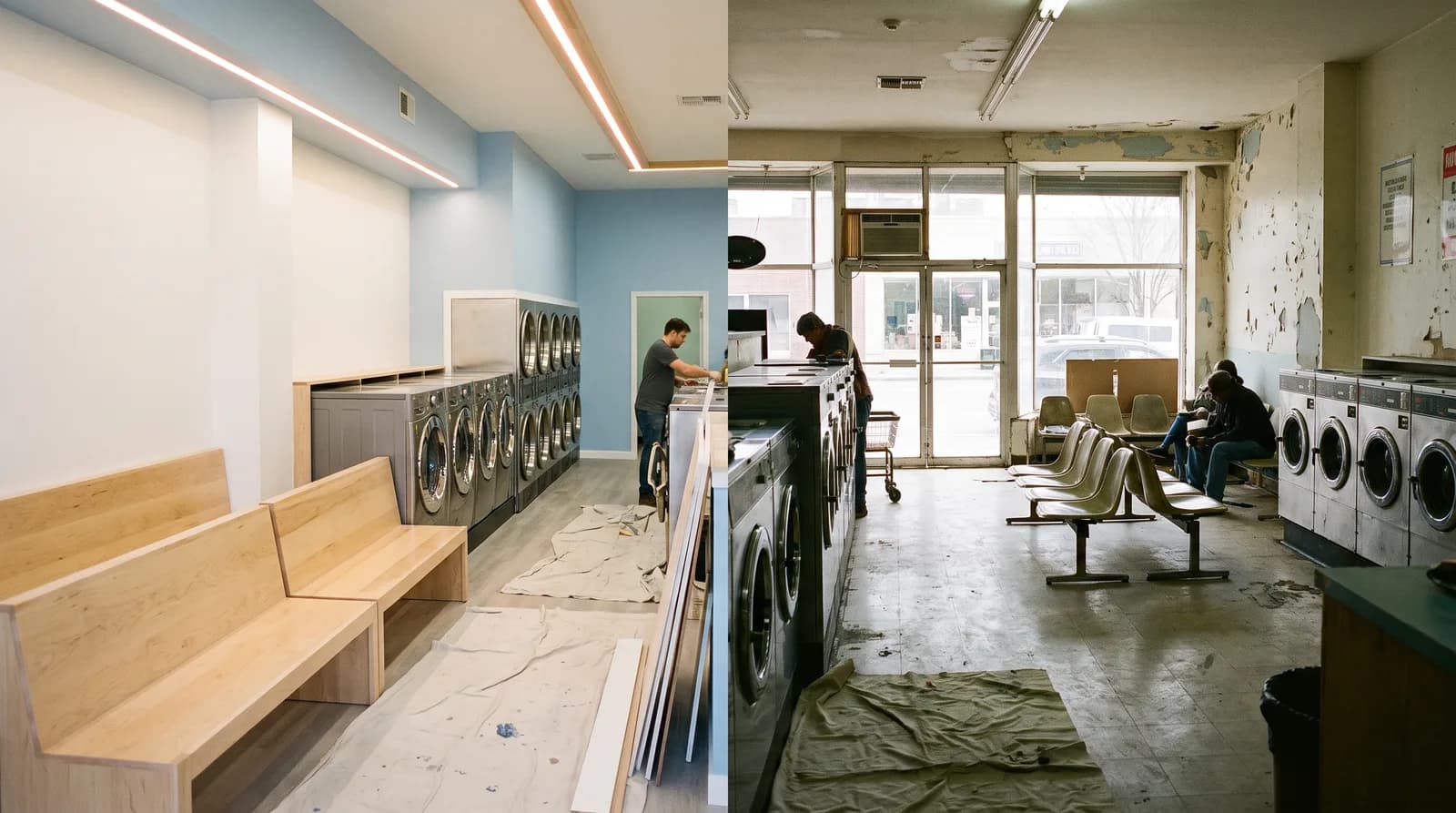
You should refresh a laundromat when it looks tired but runs fine, and re-tool it when the equipment is failing, inefficient, or wrong for the demand. A refresh is cosmetic and cheap: paint, lighting, signage, seating, and deep cleaning to change how the store feels. A re-tool is capital work: replacing washers and dryers, changing the machine mix, or reconfiguring the floor. The trigger is different for each, and spending on the wrong one wastes money, so the first job is diagnosing which problem you actually have before you write a check.
Key takeaways
- A refresh fixes how the store looks and feels; a re-tool fixes what it can do and how efficiently it runs.
- Refresh when the store is dated but functional; re-tool when equipment is failing, inefficient, or mismatched to demand.
- The two live in very different cost tiers, so misdiagnosing the problem either overspends or fails to fix it.
- Efficiency-driven re-tools can pay back through lower water and gas per turn, not just fresher looks.
- A refresh before selling can lift buyer perception; a full re-tool right before selling rarely returns its cost to the seller.
Contents
- Refresh vs remodel: what is the difference?
- What are the signs a laundromat needs a refresh?
- When does a store need a full re-tool instead?
- What do the cost tiers look like?
- How do you finance a remodel?
- What is the revenue and resale payoff?
- What if the location is the real problem?
Refresh vs remodel: what is the difference?
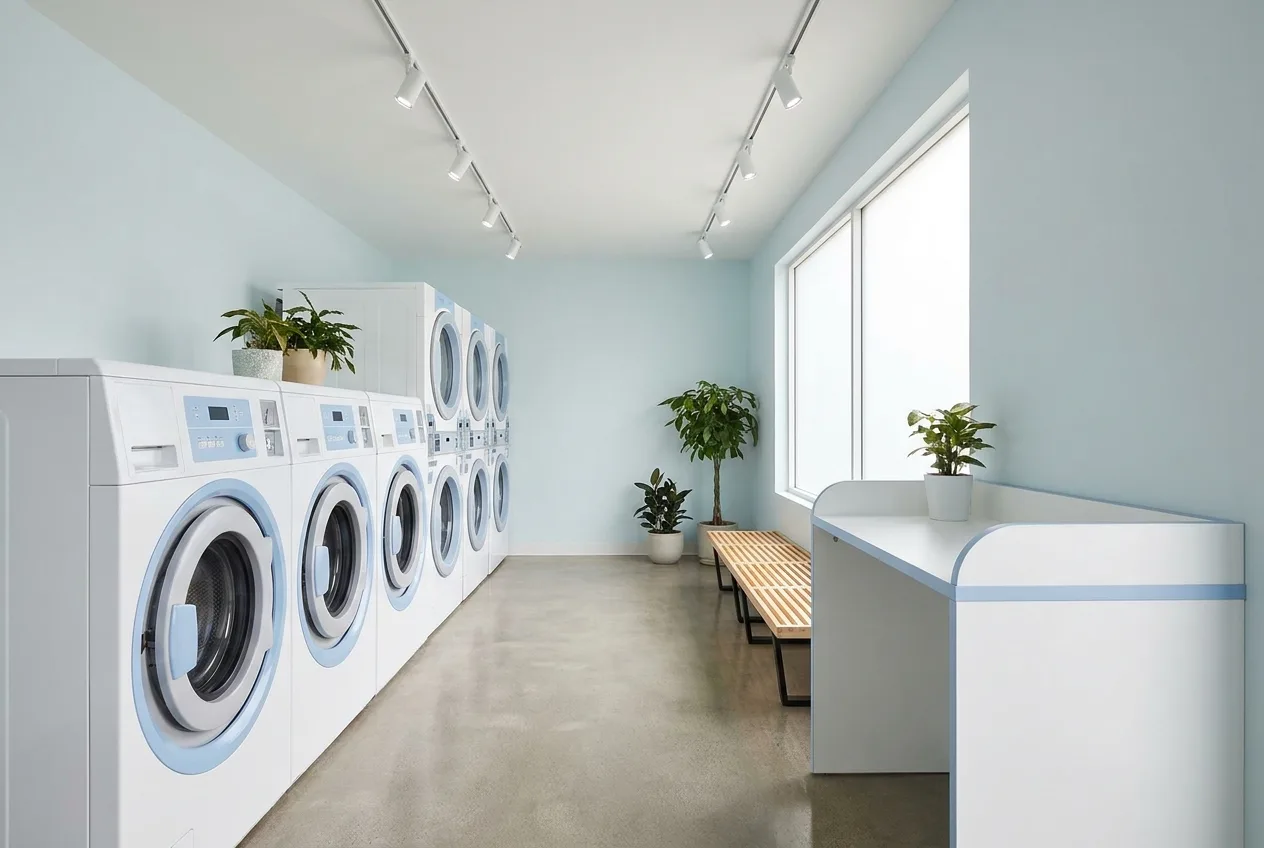
A refresh is cosmetic work that changes perception without touching the machines, while a remodel or re-tool is capital work that changes the store's equipment and layout. The refresh makes a working store feel clean, bright, and safe; the re-tool changes what the store can earn and how much it costs to run.
The reason to separate them is money. A refresh is measured in a modest budget and a few days of work; a re-tool involves major equipment spending and downtime. Treating a perception problem as an equipment problem, or the reverse, is how owners overspend.
Start by naming the symptom. If customers say the place feels grim, that is a refresh. If machines break, run long, or waste water, that is a re-tool. For the broader revenue picture these feed into, see how to increase laundromat revenue.
What are the signs a laundromat needs a refresh?
A store needs a refresh when it works but looks dated, dim, or unwelcoming, and customer perception is dragging on turns. The machines run fine; the problem is that the space feels tired, which quietly pushes customers toward a brighter competitor.
Common refresh triggers:
- Dingy paint, worn floors, or dated color scheme.
- Dim or flickering lighting that reads as unsafe at night.
- Faded, hard-to-read, or missing signage.
- Uncomfortable or insufficient seating and folding space.
- A general sense that the store feels older than the neighborhood.
Refresh work is high-return precisely because it is cheap relative to its effect on perception. Lighting and signage in particular are low-cost levers for safety and walk-in traffic; see laundromat lighting and signage. A refresh will not fix a store whose machines are failing, though.
When does a store need a full re-tool instead?
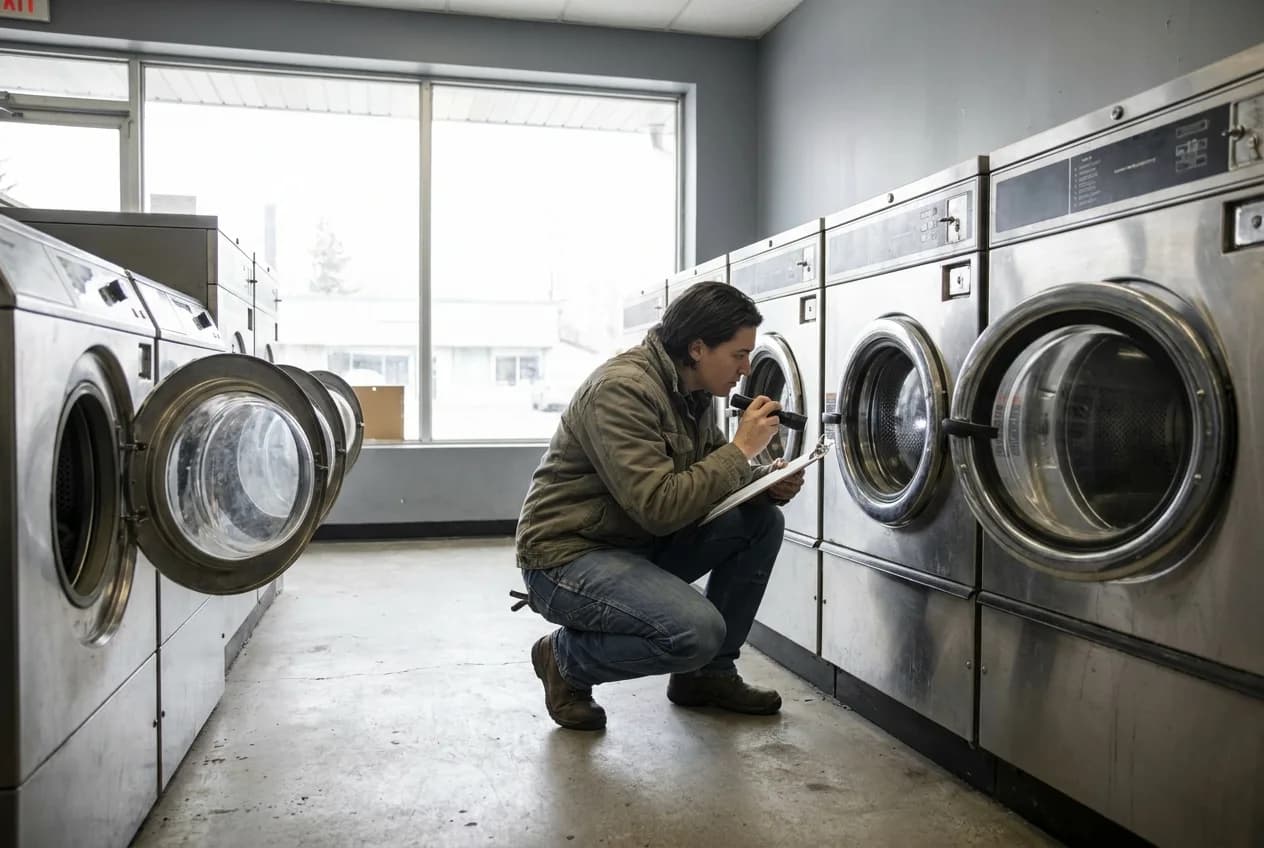
A store needs a re-tool when the equipment itself is the problem: machines are failing often, running inefficiently, or the wrong size and mix for the demand. No amount of paint fixes a store where half the washers are down or every dryer eats gas, so this is capital work, not cosmetics.
Signs you are past a refresh:
- Rising repair bills and frequent out-of-order machines.
- Old, inefficient machines using far more water and gas per turn than current ones.
- A machine mix that does not match demand, such as too few large washers when customers want them.
- Layout that creates bottlenecks at peak, capping turns per day.
An efficiency-driven re-tool can pay for itself in lower utility cost per turn, which a refresh never does. Resources from the Coin Laundry Association and efficiency guidance from Energy Star can help you scope machine replacements and any available rebates. Weigh new against used carefully in new vs used laundromat equipment.
What do the cost tiers look like?
Remodels fall into rough tiers, from a light cosmetic refresh up to a full equipment replacement and reconfiguration, and knowing which tier you are in sets the budget and the payback expectation. The tiers below are directional, not quotes, since real costs depend on store size, market, and how much you do yourself.
| Tier | Typical scope | Nature of spend | Payback logic |
|---|---|---|---|
| Light refresh | Paint, deep clean, signage, lighting | Low, mostly cosmetic | Fast, through perception and turns |
| Full refresh | Refresh plus seating, floors, restrooms | Moderate | Medium, perception and dwell time |
| Partial re-tool | Replace worst machines, add capacity | Capital, per machine | Through reliability and efficiency |
| Full re-tool | Replace machine set, reconfigure floor | Major capital, with downtime | Slow, needs a strong demand case |
The higher the tier, the stronger the demand evidence you should require before committing. A full re-tool in a weak location can lose money even when done well. Model any capital tier against returns with the laundromat ROI calculator and the guidance in laundromat ROI and returns.
How do you finance a remodel?
A light refresh is usually paid from cash flow, while a re-tool is more often financed, since equipment replacement is a capital cost that lends well against the machines themselves. Equipment financing and SBA-backed loans are common routes for the larger tiers, though terms depend on your credit, the store's numbers, and the lender.
Match the funding to the tier:
- Cosmetic refresh: operating cash or a small reserve, not debt.
- Partial or full re-tool: equipment financing secured by the machines, or an SBA loan for a larger project.
- Blend: some owners phase the work, funding the refresh from cash and financing the equipment.
Because the loan is repaid from the store's cash flow, borrow against a demand case you can defend, not a hope. General program information is at the U.S. Small Business Administration. Compare the routes in equipment financing for laundromats and the options hub at financing.
What is the revenue and resale payoff?
A refresh tends to pay back quickly through better perception and more turns, while a re-tool pays back more slowly through reliability and lower utility cost per turn, and only if demand supports the added capacity. The payoff is real but tier-dependent, and the mistake is assuming a bigger spend automatically returns more.
On resale, timing matters. A modest refresh before listing can lift buyer perception and shorten the sale, since a bright, clean store shows better. A full re-tool right before selling rarely returns its cost to the seller, because a buyer will not usually pay a full premium for brand-new equipment you just installed.
So refresh to sell, but re-tool to operate, not to flip. If your goal is more turns rather than a sale, the layout and capacity levers matter most; see how to increase turns per day at a laundromat.
What if the location is the real problem?
If foot traffic, competition, or demographics are the real constraint, neither a refresh nor a re-tool will fix it, and more equipment in a weak location just adds cost. Before any large spend, be honest about whether the store underperforms because it looks tired, because its machines are failing, or because the location cannot support more business.
The test is simple: a refresh or re-tool should target a problem you can name and measure, such as declining turns from a dated look or repair-driven downtime. If the store is simply in the wrong spot with too little demand, the money is better held than spent.
Diagnose honestly before you commit, because a good remodel on a bad location is still a bad investment. When the numbers say it is time to move on instead, see how stores are presented for sale at laundromats for sale.
Frequently asked questions
What is the difference between a laundromat refresh and a remodel?
A refresh is cosmetic work, such as paint, lighting, signage, seating, and deep cleaning, that changes how the store feels without touching the machines. A remodel or re-tool is capital work that replaces equipment or reconfigures the floor. Refresh fixes perception; re-tool fixes what the store can do and how efficiently it runs.
How do I know if my laundromat needs new machines?
Look for rising repair bills, frequent out-of-order machines, old equipment that uses far more water and gas per turn than current models, and a machine mix that does not match demand. Those are equipment problems a refresh cannot fix. An efficiency-driven replacement can pay back through lower utility cost per turn, which cosmetic work never does.
Is it worth remodeling a laundromat before selling it?
A modest refresh before listing often helps, because a bright, clean store shows better and can shorten the sale. A full equipment re-tool right before selling rarely returns its cost to the seller, since a buyer usually will not pay a full premium for machines you just installed. Refresh to sell, but re-tool to operate rather than to flip.
How should I finance a laundromat remodel?
Pay a light cosmetic refresh from operating cash rather than debt, and finance a larger re-tool, since equipment lends well against itself. Equipment financing and SBA-backed loans are common routes for the bigger tiers, with terms depending on your credit and the store's numbers. Because the loan is repaid from cash flow, borrow against a demand case you can defend.
Will remodeling fix a laundromat that is losing money?
Only if the problem is a dated look or failing equipment that a remodel actually addresses. If the store underperforms because of the location, competition, or weak demographics, neither a refresh nor a re-tool will fix it, and more equipment just adds cost. Diagnose the real constraint honestly before committing to any large spend.