Best Vending Machines for Laundromats
SudsList Editorial · Jul 26, 2026
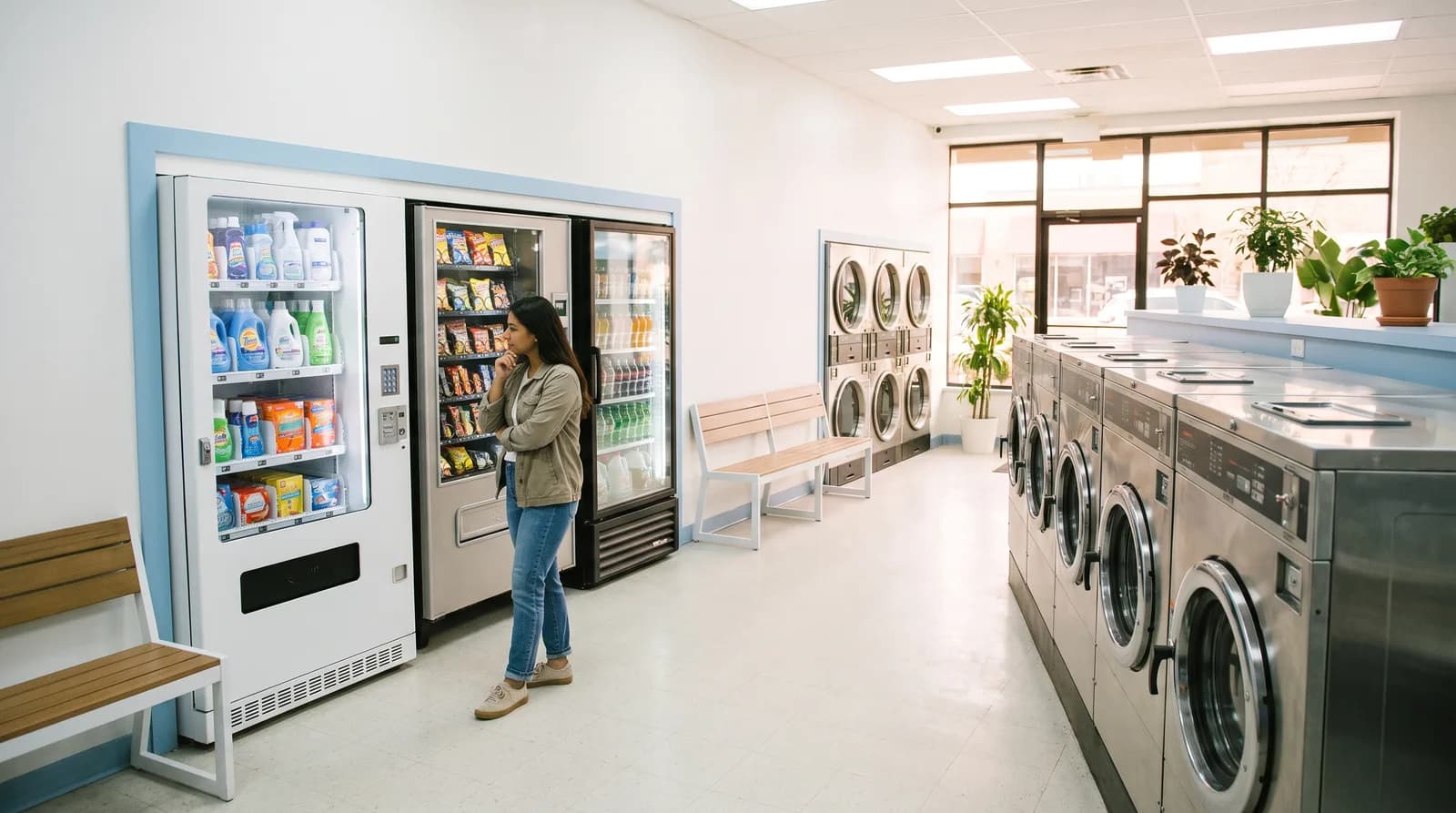
The vending machines that pay best in a laundromat are a reliable change or value-add machine, a soap and laundry-product vendor, and a snack or drink option sized to your dwell time, because customers are captive for the length of a wash and dry cycle and buy on impulse. There is no single best machine; the right mix depends on your foot traffic, whether you run coin or card, and how much space you can give up. Vending is a high-margin add-on, but only if the machines stay stocked, working, and placed where waiting customers actually see them.
This guide covers each vending type, how to think about margin and payback, where to place machines, and when a machine is not worth adding. It stays vendor-neutral; the goal is helping you choose, not selling a brand.
Key takeaways
- Customers are captive for a full wash and dry cycle, which makes impulse categories like soap, snacks, and drinks natural fits.
- Vending is high-margin but low-absolute-dollar per store, so treat it as a supplement to turns, not a core revenue plan.
- A stocked, working machine in a visible spot earns; an empty or broken one drives complaints and refunds, so restocking discipline decides the return.
- Change machines are becoming optional as card and app payment spreads, but stores that still take coins usually need a reliable one.
- Match machine type to your dwell time and traffic; a low-traffic store cannot support the same vending lineup as a busy one.
Contents
- Why does vending work in a laundromat?
- What types of vending machines fit a laundromat?
- How do the vending options compare?
- What margins can you expect?
- Do you still need a change machine?
- Where should you place vending machines?
- How much do vending machines cost and when do they pay back?
- How do you keep machines stocked and working?
- When is a vending machine not worth it?
- How does vending fit your wider add-on plan?
Why does vending work in a laundromat?
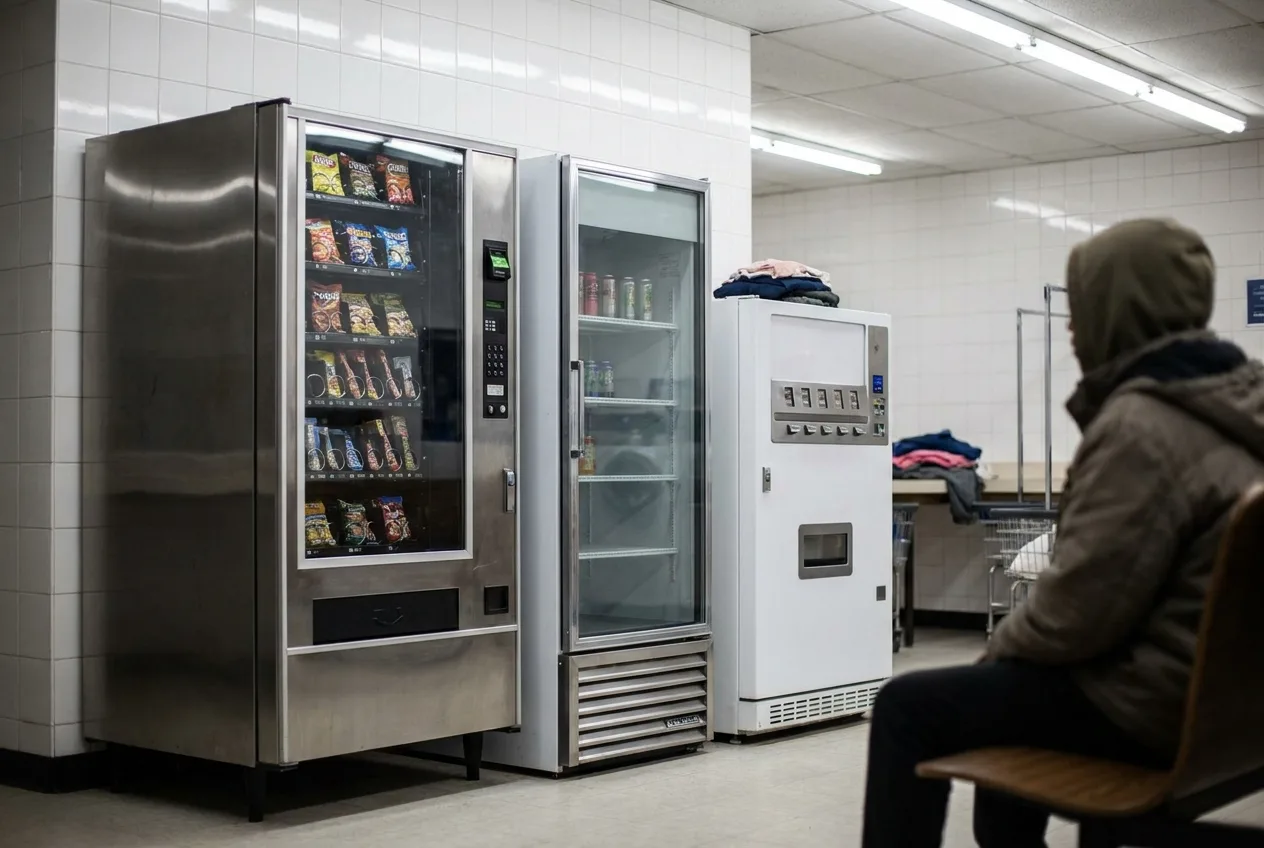
Vending works in a laundromat because customers are physically stuck on site for the length of a wash and dry cycle, often 45 minutes to well over an hour, with little else to do and a real chance they forgot detergent. That captive dwell time turns small impulse purchases into steady add-on revenue that costs you almost nothing in labor once the machines are placed.
The economics are simple. You are not creating demand from scratch; you are capturing spending from people already in your store with time on their hands. A customer who forgot soap will buy it from your vendor rather than leave, and a bored customer waiting on a dryer is an easy sale for a drink or snack. The margins on these small items are strong, which is why vending shows up in nearly every profitable store.
The limit is scale. Even a busy laundromat only has so many waiting customers, so vending supplements turns rather than replacing them. Treat it as one of several add-ons, not the main event. For the broader revenue picture, see how to increase laundromat revenue.
What types of vending machines fit a laundromat?
The machines that fit a laundromat are the ones serving a need the customer has while waiting: laundry products they may have forgotten, and food or drink to pass the time. Below are the main categories and where each earns its place.
Soap and laundry-product vending
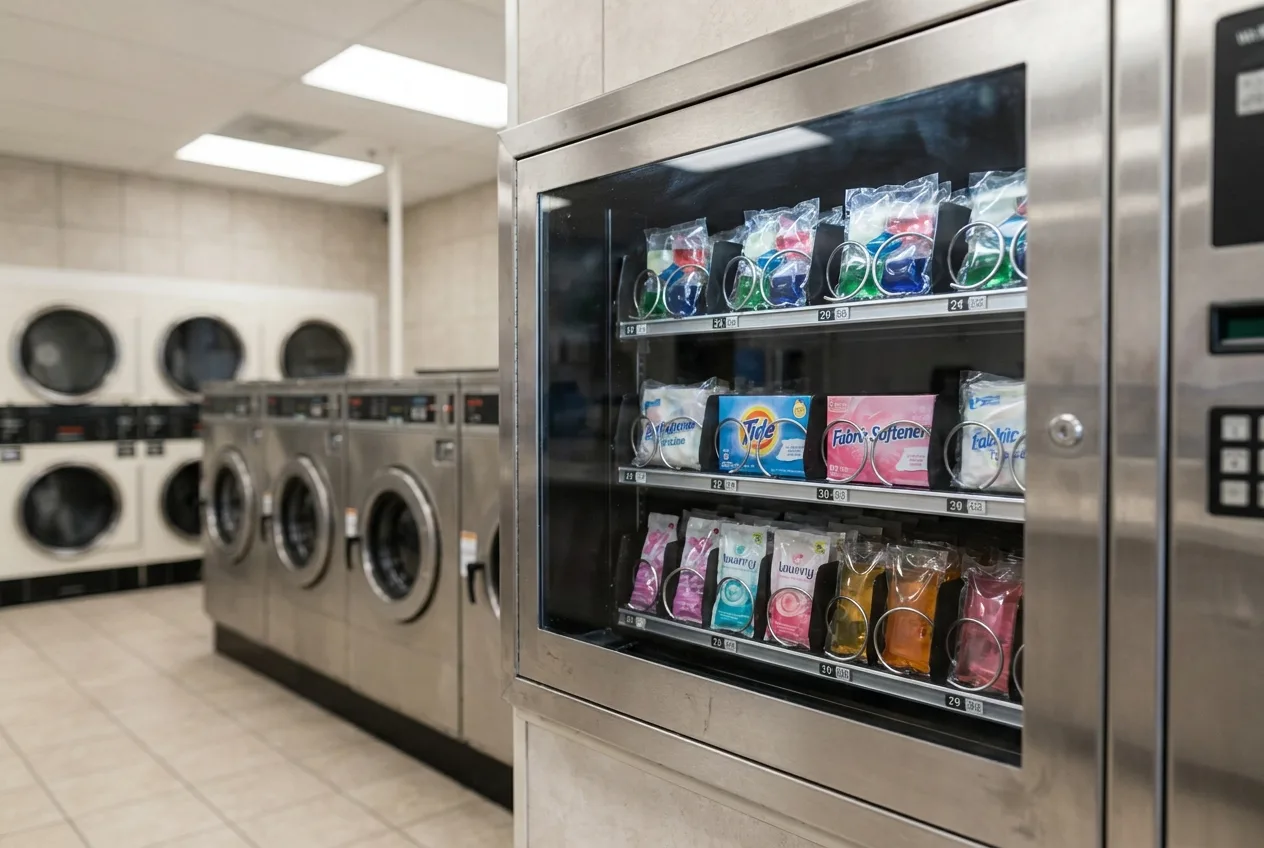
Soap and laundry-product vendors are usually the highest-fit machine, because forgetting detergent or needing a single-load dose is a common, laundromat-specific need. These dispense single-use detergent, fabric softener, dryer sheets, stain remover, and bleach, and they convert what would be a lost trip into a sale. For many stores this is the first vending machine to add.
Snack vending
Snack vendors serve the dwell time, offering chips, candy, and packaged snacks to customers waiting out a cycle. They pair naturally with seating and are a reliable impulse category, though the per-item dollars are small. Refrigeration is not required, which keeps them simple to run.
Drink vending
Drink vendors, whether canned, bottled, or a cooler-style unit, capture thirst during a long wait and often outperform snacks in warm climates. Refrigerated units draw more power and cost more upfront, so weigh the energy cost, which ties into your broader laundromat utility bills.
Combo vending
Combo machines put snacks and drinks in one footprint, which is ideal for stores tight on space or traffic. You give up some capacity per category but save floor space and one machine's cost, a sensible trade for smaller stores.
Change and value-add machines
Change machines convert bills to coins, and value-add machines load funds onto a laundry card or app. Which you need depends entirely on your payment system, covered in the change-machine section below.
How do the vending options compare?
Each vending type trades margin, space, complexity, and how directly it serves a laundromat need. The table below is a general comparison to guide your mix, not fixed numbers, since your traffic and pricing drive the actual result.
| Machine type | Fit for laundromat | Margin profile | Space and power | Best for |
|---|---|---|---|---|
| Soap and laundry products | Very high, solves a common need | Strong | Small, no power | Nearly every store |
| Snack | High, serves dwell time | Strong on small dollars | Medium, no refrigeration | Stores with seating and traffic |
| Drink | High, especially in warm areas | Strong, higher item price | Medium to large, needs power | Busy or hot-climate stores |
| Combo (snack and drink) | High, space-efficient | Blended | Medium, needs power | Smaller or lower-traffic stores |
| Change machine | Depends on payment system | None, it is a utility | Medium, secure install | Coin stores |
| Value-add (card or app loader) | High for card or app stores | None, it is a utility | Small to medium | Card and app stores |
Use this to sequence purchases: soap first for most stores, then snack or drink or a combo based on space, and a change or value-add machine dictated by your payment system.
What margins can you expect?
Vending margins on laundromat impulse items are generally strong on a per-item basis, since you buy products wholesale and sell at retail impulse prices, but the total dollars per store stay modest because volume is capped by how many customers wait each day. The category earns its keep through high margin and near-zero labor, not through big top-line numbers.
Think of it in two layers. Per item, laundry products and snacks and drinks carry healthy markups. Per store, the total depends on foot traffic, so a busy store with strong dwell time makes meaningfully more from the same machines than a quiet one. The practical takeaway is to right-size vending to your traffic rather than overbuying machines a slow store cannot fill.
Model the contribution honestly inside your overall numbers using the laundromat cash flow calculator, and remember that a machine only earns when it is stocked and working. An out-of-stock or jammed machine produces refunds and complaints instead of margin.
Do you still need a change machine?
Whether you need a change machine depends entirely on your payment system: coin stores generally still need a reliable one, while card and app stores may replace it with a value-add kiosk or drop it altogether. The industry is drifting toward card and app payment, which changes this answer for many operators.
Consider the direction of your store:
- Coin store: a dependable, secure change machine is close to mandatory, since a customer who cannot get coins cannot run a machine.
- Card or app store: a value-add kiosk that loads funds onto a card or phone often replaces the change machine.
- Hybrid store: you may run both during a transition period.
If you are weighing a shift, read should your laundromat go cashless and coin-to-card conversion for laundromats. A change machine also holds cash, which makes it a theft target, so secure and monitor it as part of your loss-prevention setup.
Where should you place vending machines?
Place vending where waiting customers naturally look and stand: near seating, along the main walking path, and within sight of the machine banks, because a vendor customers do not see does not sell. Placement is one of the biggest levers on vending revenue and costs nothing to get right.
Placement principles:
- Put soap and laundry-product vendors near the washer bank, where the need occurs at the moment of loading.
- Put snack and drink machines near seating and the folding area, where dwell time is longest.
- Keep machines on the main sightline from the entrance and the waiting area.
- Ensure the machines are well lit and not tucked into a dim corner, which also supports safety.
- Leave clear access so a cluster of machines does not block the walking path.
Good lighting helps both sales and security; the broader point is covered in laundromat lighting and signage. Small placement changes, like moving a soap vendor next to the washers, often lift sales more than adding a machine.
How much do vending machines cost and when do they pay back?
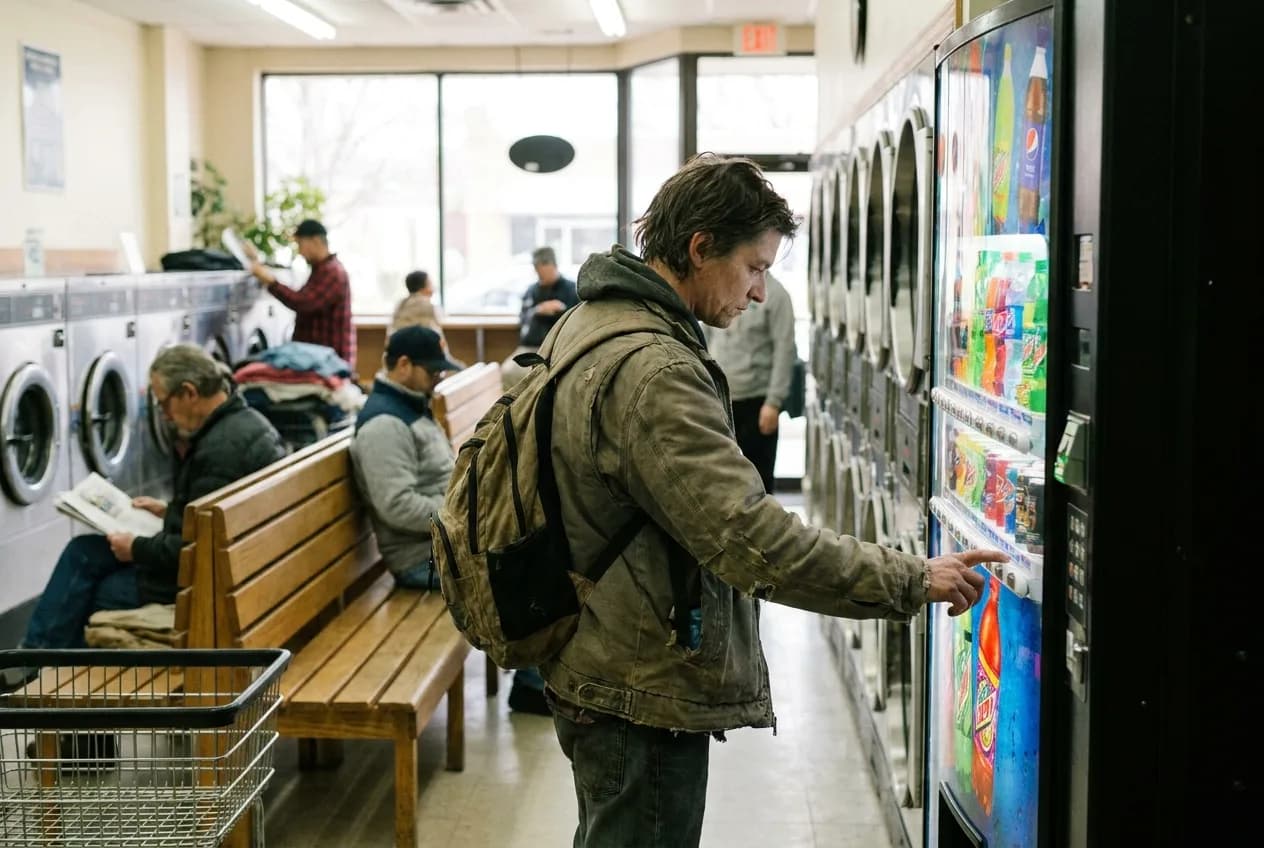
Vending machine cost ranges widely, from modest for a basic soap or snack vendor to several thousand dollars for a refrigerated drink or combo unit, with used machines available at a discount if they are in good working order. Payback depends on your traffic, so a busy store recovers the cost far faster than a slow one.
What shapes the number and the payback:
- New versus used; used can cut upfront cost sharply but carries reliability risk, similar to the trade covered in new vs used laundromat equipment.
- Refrigeration and electronics; refrigerated and card-enabled machines cost more upfront and to run.
- Traffic and dwell time; the same machine pays back much faster in a busy store.
- Restocking cost and your time or an attendant's, which eats into the margin.
Vending equipment is generally a depreciable business asset rather than an immediate expense, so confirm treatment with a qualified professional and the IRS guidance for your situation. When comparing machines, buy for reliability first; a cheap unit that jams and issues refunds costs more than it saves.
How do you keep machines stocked and working?
Keeping machines stocked and working is what separates vending that earns from vending that generates complaints, so build restocking and fault checks into your regular store routine. A machine is only an asset while it is full and functioning; the moment it is empty or jammed, it becomes a source of refunds and lost trust.
Build these habits:
- Check stock and clear faults on a set schedule, folded into opening and closing routines.
- Track which items sell so you stock what moves and cut what does not.
- Watch expiration dates on food and drink to avoid dead stock and complaints.
- Handle refunds quickly and fairly, since a customer stiffed by a machine remembers it.
- Log recurring faults so you repair or replace a chronically unreliable machine.
Document this in your written procedures; see laundromat standard operating procedures. If you run largely absentee, restocking is one of the tasks you must delegate or contract, which is part of the systems in how to run an absentee laundromat.
When is a vending machine not worth it?
A vending machine is not worth it when your traffic is too low to keep it turning over, when it blocks space better used for revenue-generating laundry machines, or when it is chronically unreliable and generating more refunds than sales. More machines do not fix a slow store; they just tie up cash and floor space.
Signs to hold off or pull a machine:
- Foot traffic too thin to move perishable or even non-perishable stock before it ages.
- Floor space that would earn more as an added washer or dryer or folding area.
- A machine that jams often, issues frequent refunds, or draws complaints.
- A drink cooler whose energy cost outweighs its sales in a low-traffic store.
Be honest about your store. Vending amplifies an already busy, well-run laundromat; it does not rescue a slow one. If traffic is the problem, that is a location and marketing issue, not a vending one.
How does vending fit your wider add-on plan?
Vending is one piece of a larger add-on strategy that can include wash-and-fold, dry-clean drop-off, and other services, and it is usually the easiest and lowest-labor of them. It belongs in the plan, but it should not be the whole plan, since higher-value services often move the needle more.
Sequence your add-ons by effort and return:
- Start with vending, which is low-labor and captures existing dwell time.
- Layer in higher-value services like wash-and-fold as traffic and space allow.
- Compare options in profitable laundromat add-on services and laundromat vending and add-on revenue.
- Consider comfort amenities that lengthen dwell time and support vending, covered in laundromat amenities that increase revenue.
For general small-business guidance on running these operations, the FTC publishes resources worth reviewing, and operator benchmarks from the Coin Laundry Association help you compare your mix. Treat vending as a dependable, high-margin supplement: get the basics stocked and placed well, then invest your bigger effort where the larger returns are.
Frequently asked questions
What is the single best vending machine to start with?
For most laundromats, a soap and laundry-product vendor, because it solves a common, laundromat-specific need: customers who forgot detergent or want a single dose. It is small, needs no power, and converts a lost trip into a sale. Add snack, drink, or combo machines next based on your space and traffic.
Are refrigerated drink machines worth the energy cost?
In busy stores or warm climates, usually yes, since drink sales during long waits can be strong. In a low-traffic store the refrigeration cost can outweigh the sales, so check your foot traffic first. A combo machine or non-refrigerated options may make more sense for a slower store.
Should I buy new or used vending machines?
Used machines can cut upfront cost significantly and are common in laundromats, but reliability is the deciding factor. A used machine in good working order is fine, while a cheap unit that jams and issues refunds costs more than it saves in complaints and lost trust. Buy for reliability first regardless of new or used.
Do I still need a change machine if I take cards?
Often no. Card and app stores frequently replace the change machine with a value-add kiosk that loads funds onto a card or phone, or drop it entirely. Coin stores generally still need a reliable change machine. Match the decision to your payment system and where your store is heading.
How much can vending realistically add to my revenue?
It varies with traffic, but vending is best seen as a high-margin supplement rather than a core revenue driver, since total dollars are capped by how many customers wait each day. A busy store earns meaningfully more from the same machines than a slow one. Right-size your vending to your traffic and model it in your cash flow rather than expecting it to transform the store.
Who restocks and maintains the machines?
You, an attendant, or in some cases a third-party vending operator who stocks the machines in exchange for a share of sales. Self-stocking keeps the full margin but takes your time, while a vending operator removes the labor at the cost of some revenue. Whichever you choose, build stock and fault checks into your regular store routine so machines never sit empty or broken.