Laundromat Industry Outlook 2026
SudsList Editorial · Sep 7, 2026
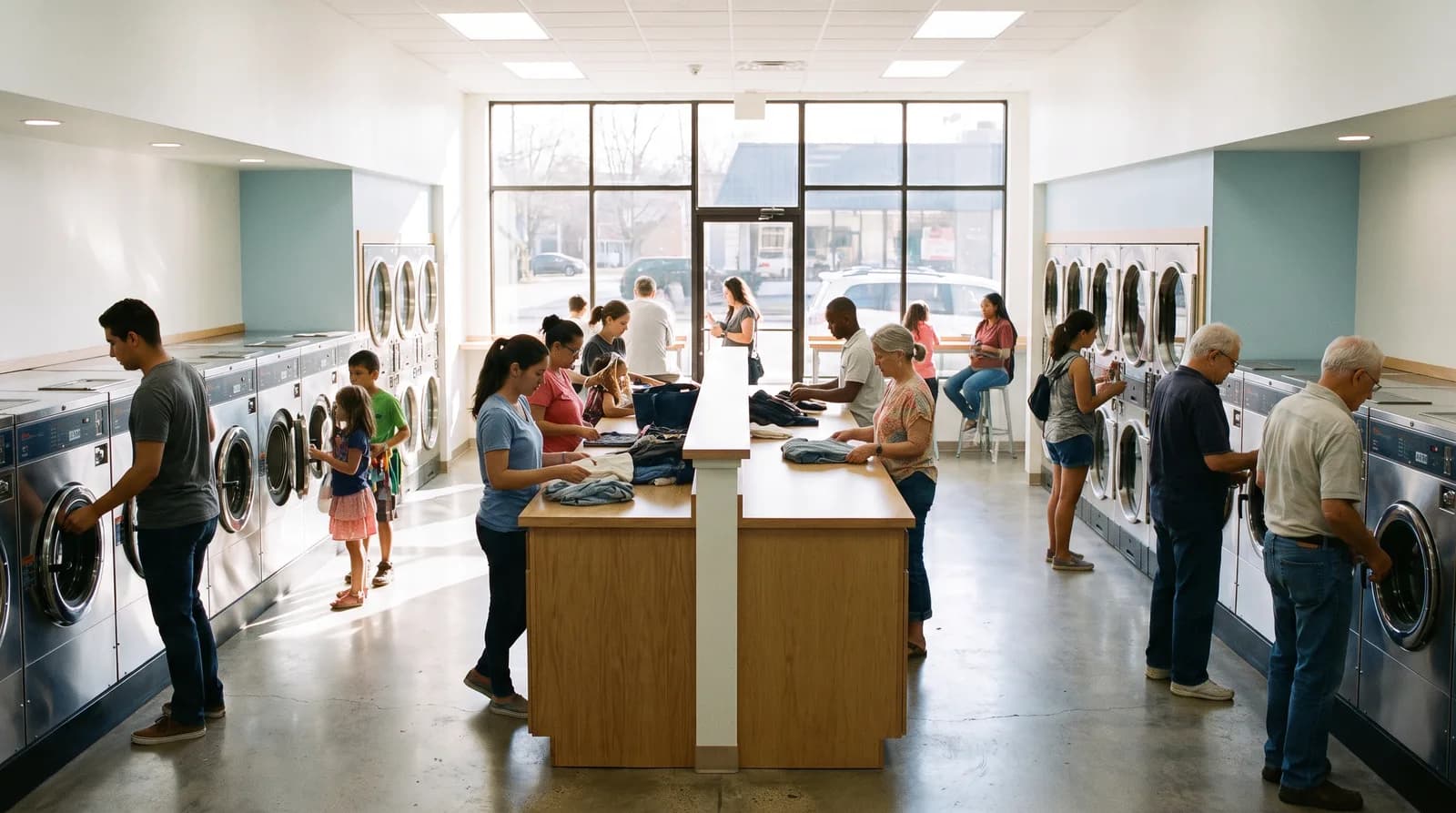
The laundromat industry heads into 2026 with steady underlying demand and rising cost pressure, so the winners will be operators who control utilities, adopt cashless and delivery where it pays, and buy on real numbers rather than hype. Laundry is a repeat necessity that holds up across economic cycles, which keeps well-located stores resilient, but higher water, gas, electric, and labor costs are squeezing margins at the same time. The 2026 outlook is not boom or bust; it is a story of durable demand meeting a tighter cost structure, rewarding disciplined operators and punishing neglected stores.
Key takeaways
- Laundry demand is durable because it is a recurring necessity, so the core business remains resilient into 2026 even as costs rise.
- Utility and labor costs are the defining pressure, so efficiency and smart scheduling matter more than adding machines.
- Cashless and app payments continue to spread, and pickup-and-delivery keeps growing as a higher-margin layer on top of self-service.
- The industry stays fragmented and mostly independent, with slow consolidation rather than a sudden corporate takeover.
- Buyers should underwrite on verified revenue and current utility rates, not on a seller's optimistic projection.
Contents
- Is the laundromat business still a good bet in 2026?
- What is driving laundry demand in 2026?
- How fast is cashless payment taking over?
- Is pickup and delivery still growing?
- How much are utility costs pressuring operators?
- What is happening with laundromat labor costs?
- Is the industry consolidating?
- What does 2026 mean for buyers?
- What does 2026 mean for current operators?
- What are the biggest risks heading into 2026?
- How should you position a store for the next few years?
Is the laundromat business still a good bet in 2026?
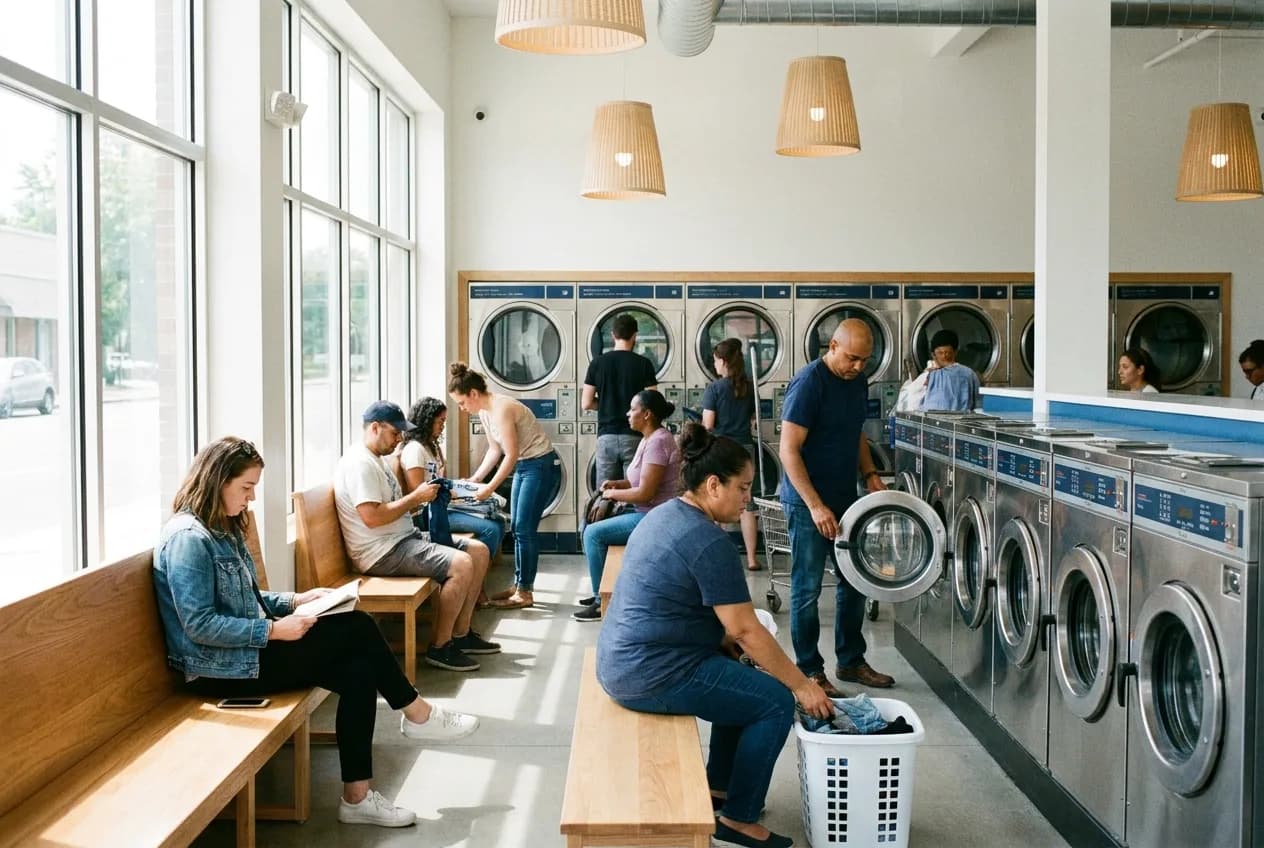
Yes, for the right store, because laundromats sell a recurring necessity that does not disappear in a downturn. The business remains attractive for its steady cash flow and semi-absentee potential, but 2026 raises the bar on operating discipline as utility and labor costs climb.
The honest version is that a good laundromat is still a good bet and a bad one is worse than before. A well-located, efficient, card-enabled store can absorb rising costs; a tired coin store in a soft location cannot. For the underlying case, read is a laundromat a good investment. Treat 2026 as a year that rewards operators, not just owners.
What is driving laundry demand in 2026?
Demand is driven by renters, multi-family housing, and people without in-unit laundry, a base that stays large regardless of the economy. Roughly a third of U.S. households rent, and many lack their own washer and dryer, which sustains steady self-service demand in dense neighborhoods.
Several durable factors support the demand base:
- A large renter population that relies on shared or public laundry.
- Multi-family and urban housing where in-unit laundry is uncommon.
- Time-pressed households buying wash-and-fold and delivery for convenience.
- Laundry being non-discretionary, so volume holds through good years and bad.
None of this requires a 2026-specific forecast; it is the structural demand that has kept the category stable for decades. The Coin Laundry Association publishes industry benchmarks that describe this base in more detail. Demand is rarely the problem; location and cost control usually are.
How fast is cashless payment taking over?
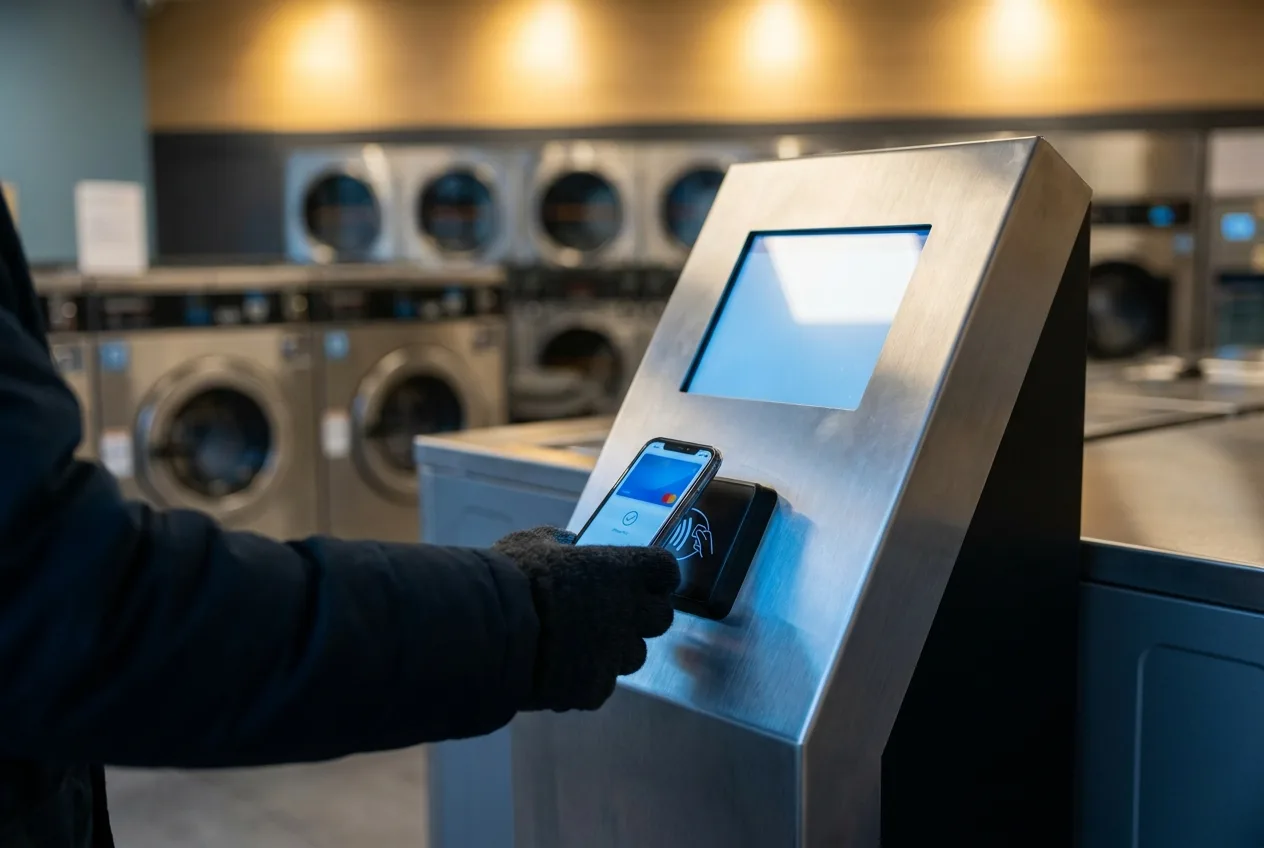
Cashless and app payments keep gaining share, and the direction is one-way: toward cards, mobile wallets, and store apps alongside or instead of coin. New builds and remodels increasingly go card or app first, and coin-only stores are slowly becoming the exception rather than the norm.
The pull toward cashless comes from real operating benefits:
- Vend-price flexibility, so you can adjust prices without changing coin mechanisms.
- Less cash to collect, count, and protect, which cuts shrink risk.
- Machine and revenue data that make remote monitoring possible.
- Easier loyalty programs and promotions tied to a card or app.
The trade-off is transaction fees and the fact that some cash-preferring customers still exist, so many stores run hybrid. For the retrofit decision, see coin-to-card conversion for laundromats and the broader comparison in coin vs card vs app payment systems. The question in 2026 is usually when to convert, not whether.
Is pickup and delivery still growing?
Yes, pickup-and-delivery laundry continues to grow as a convenience layer on top of self-service and wash-and-fold. Time-pressed customers pay a premium to skip the trip, and delivery lets a single store serve a wider radius than its walk-in area.
Delivery is attractive because it is higher margin and less location-bound than self-service turns. It also carries real added cost in labor, routing, and app or software fees, so it grows profit only when route density is high enough. For the operator playbook, read how to add pickup and delivery to a laundromat and the fuller path in how to start a laundry pickup and delivery business. Delivery is a growth lever, not a rescue for a weak core store.
How much are utility costs pressuring operators?
Utilities are the defining cost pressure heading into 2026, since water, sewer, gas, and electric together make up a large share of a laundromat's operating expense. Rate increases in many markets are outpacing what operators can quietly pass along, which squeezes margins on every turn.
This is where efficiency stops being optional. High-efficiency front-load washers, modern water heaters, LED lighting, and leak detection all cut cost per turn, and Energy Star lists commercial equipment criteria and potential rebates at Energy Star. For the concrete moves, see how to reduce laundromat utility bills and high-efficiency washers and your water bill.
| 2026 cost pressure | Why it is rising | Operator response |
|---|---|---|
| Water and sewer | Municipal rate increases in many areas | High-efficiency washers, leak detection, reclaim systems |
| Natural gas | Volatile heating and drying fuel prices | Efficient water heaters, dryer maintenance, vent care |
| Electric | Grid and demand-charge increases | LED lighting, efficient motors, off-peak awareness |
| Labor | Rising minimum wages and tight hiring | Schedule to turns, automate cash, cross-train |
Model these directly against your revenue in the laundromat cash flow calculator. The stores that thrive in 2026 will be the efficient ones.
What is happening with laundromat labor costs?
Labor costs are rising as minimum wages increase in many states and cities, which hits attended stores and wash-and-fold operations hardest. A store that leans on attendant hours or a folding team feels wage increases directly in its margin.
The response is not to cut service blindly but to schedule labor to demand and automate what you can. Match attendant hours to your busiest turns, use card and app systems to reduce cash-handling labor, and cross-train so fewer people cover more tasks. Wage and hour rules vary by jurisdiction, so confirm specifics with the U.S. Department of Labor rather than assuming a national rate. For the deeper dive, see minimum wage in 2026 and laundromat labor costs.
Is the industry consolidating?
Consolidation is happening slowly, but the industry remains overwhelmingly independent and fragmented in 2026. Some multi-store operators and small regional groups are buying up single locations, yet most laundromats are still owned by individuals or families.
What this means practically is that opportunity still favors the independent buyer. Larger operators bring purchasing power and systems, but they do not dominate any local market the way chains do in other retail categories. A disciplined single-store buyer competes fine on location, cleanliness, and service. The consolidation trend is a reason to run a tighter store, not a reason to assume you are being squeezed out.
What does 2026 mean for buyers?
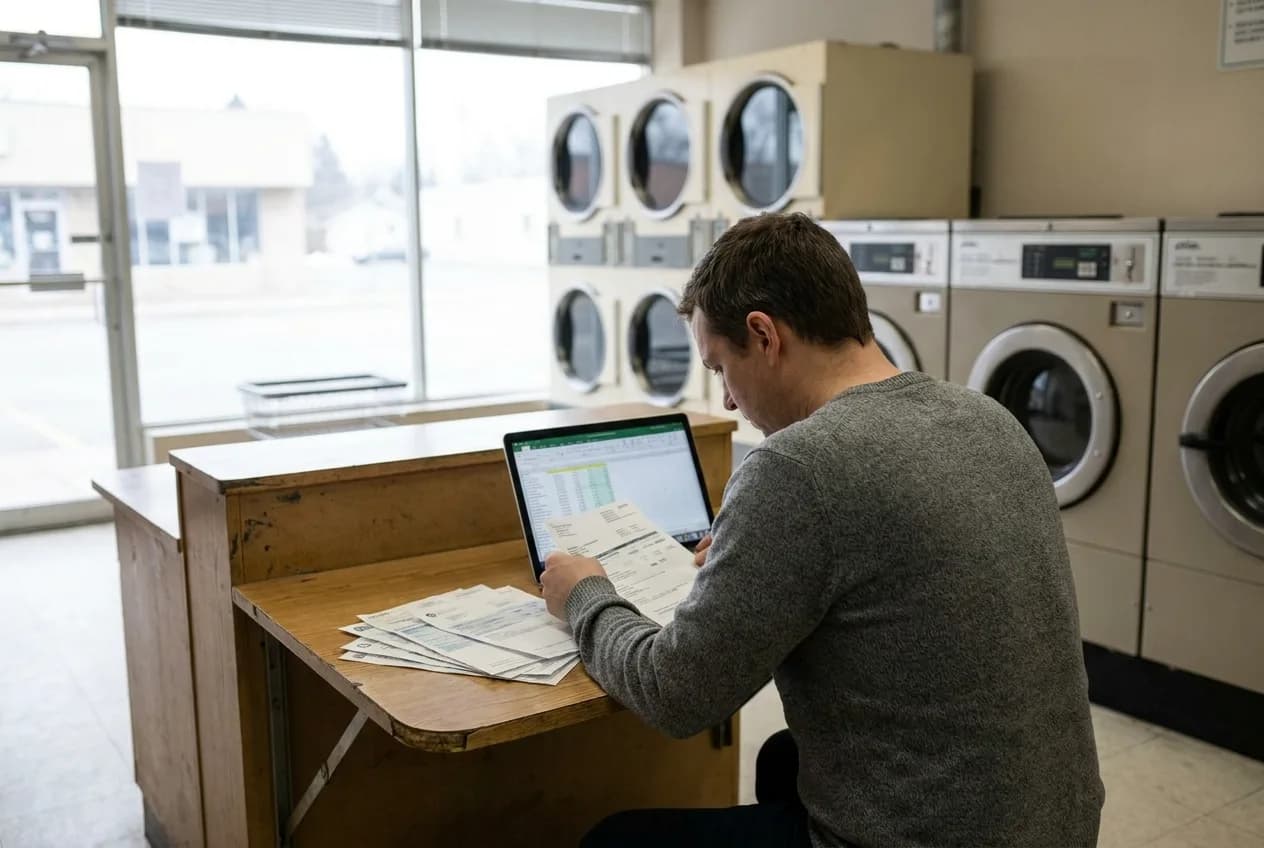
For buyers, 2026 means underwriting on verified numbers and current utility rates, not on a seller's projection or a pre-increase expense history. Rising costs make due diligence more important, because a store that looked profitable on last year's utility bills may be thinner today.
When you evaluate a store in 2026:
- Verify revenue against water usage, not just the seller's word, using the method in how to verify a laundromat's revenue.
- Pull the most recent utility bills and price the store on current rates.
- Check the age and efficiency of the equipment, since re-equipping is a major cost.
- Read the lease carefully, because rent plus utilities is where margin lives or dies.
Run the deal through the laundromat ROI calculator and browse active laundromats for sale to calibrate on real listings. Buy on today's cost structure, not yesterday's.
What does 2026 mean for current operators?
For current operators, 2026 rewards efficiency upgrades, considered price increases, and adding higher-margin services. Standing still while utilities and wages rise slowly erodes margin, so the year calls for active management rather than coasting.
The practical priorities:
- Cut cost per turn with efficient equipment, water heaters, and lighting.
- Raise vend prices thoughtfully when utilities climb, guided by when to raise laundromat prices.
- Add wash-and-fold or delivery if your labor and space support it.
- Convert toward card or app to gain data and cut cash-handling cost.
The operators who treat 2026 as a management year, not a passive one, protect their margin and their eventual sale price. A store run tight today is worth more tomorrow.
What are the biggest risks heading into 2026?
The biggest risks are rent and utility increases that outrun price increases, and over-investing in delivery or equipment before the demand supports it. Cost creep is quiet, and it can erase profit on a store that looks healthy on the surface.
Watch these risks specifically:
- Utility and rent increases compressing margin faster than you raise prices.
- Adding delivery or wash-and-fold labor without the volume to cover it.
- Deferring maintenance, which turns into larger repair bills and downtime.
- Buying on stale financials that predate recent cost increases.
None of these are new, but higher input costs make each one bite harder in 2026. Honest cost modeling is the best defense.
How should you position a store for the next few years?
Position a store around efficiency, cashless convenience, and a clean, safe customer experience, because those are the levers that hold up as costs rise. The durable demand is there; the question is whether your store captures it at a healthy margin.
A store built for the next few years tends to be efficient on utilities, card or app enabled, well-lit and clean, and layered with wash-and-fold or delivery where the market supports it. That combination absorbs rising costs and keeps customers loyal. For the operating foundation, work through how to run a laundromat and how to increase laundromat revenue. The outlook favors operators who manage actively, not owners who assume the machines run themselves.
Frequently asked questions
Is 2026 a good time to buy a laundromat?
It can be, for a well-located and efficient store bought on verified numbers. Laundry demand is durable, but rising utility and labor costs mean you should underwrite on current rates rather than a seller's older financials. A tired coin store in a soft location is riskier now than it was a few years ago, so due diligence matters more.
Are laundromats affected by inflation and rising costs?
Yes, mainly through utilities, rent, and labor, which are the largest operating costs. Revenue tends to hold because laundry is a necessity, but margin gets squeezed when water, gas, electric, and wages rise faster than vend prices. Efficiency upgrades and considered price increases are how operators protect margin.
Will cashless payments replace coin laundromats?
The trend points toward card and app payments, and many new builds and remodels go cashless first, but coin is not gone. Plenty of stores run hybrid to serve cash-preferring customers. The practical question for most operators in 2026 is when to convert, not whether, weighing vend flexibility and data against transaction fees.
Is pickup-and-delivery laundry worth adding in 2026?
It is worth adding when your route density and labor support it, since delivery is higher margin but carries real routing and labor cost. It works best as a growth layer on a healthy self-service and wash-and-fold base, not as a fix for a weak store. Model the per-stop economics before you commit drivers and software.
Is the laundromat industry being taken over by big companies?
No, the industry remains largely independent and fragmented in 2026. Some multi-store and regional operators are buying single locations, but consolidation is slow and no chain dominates local markets the way it does in other retail. A disciplined single-store owner still competes well on location, cleanliness, and service.
What is the single most important thing for a laundromat in 2026?
Controlling cost per turn while keeping the store clean and convenient. With utilities and wages rising, efficient equipment, smart scheduling, and thoughtful pricing protect the margin that durable demand provides. Neglecting maintenance or coasting on old cost assumptions is the fastest way to lose that margin.